.png.webp)
Stop Buying Fake 316L: Where to Buy Stainless Steel Jewelry That Won’t Tarnish
A definitive guide to securing waterproof, hypoallergenic pieces, bypassing trading companies, and scaling your jewelry business with zero return rates.
If you are wondering where to buy stainless steel jewelry online that truly lasts, you are not alone. As an industry insider and the manufacturing team behind Azone Jewelry, we have audited hundreds of supply chains over the past 20 years. We wrote this guide to help B2B buyers and brands cut through the marketing noise and find true source factories.
The Hidden Trap Behind the Stainless Steel Jewelry Market
Many new brand owners start their sourcing journey by searching for where to buy cheap stainless steel jewelry or scouring horror stories on threads discussing where to buy stainless steel jewelry reddit. The result is often the same: they place an order, the jewelry arrives looking pristine, and sales spike. But within a week, the nightmare begins: emails flooding in about the dreaded “green finger,” tarnished chains, and angry customers demanding refunds.
The uncomfortable truth? You likely didn’t buy real jewelry-grade stainless steel. The market is flooded with cheap zinc or copper alloys heavily plated with unstable nickel to mimic a premium finish. This isn’t just a quality control issue; it’s a fatal blow to your brand’s reputation.
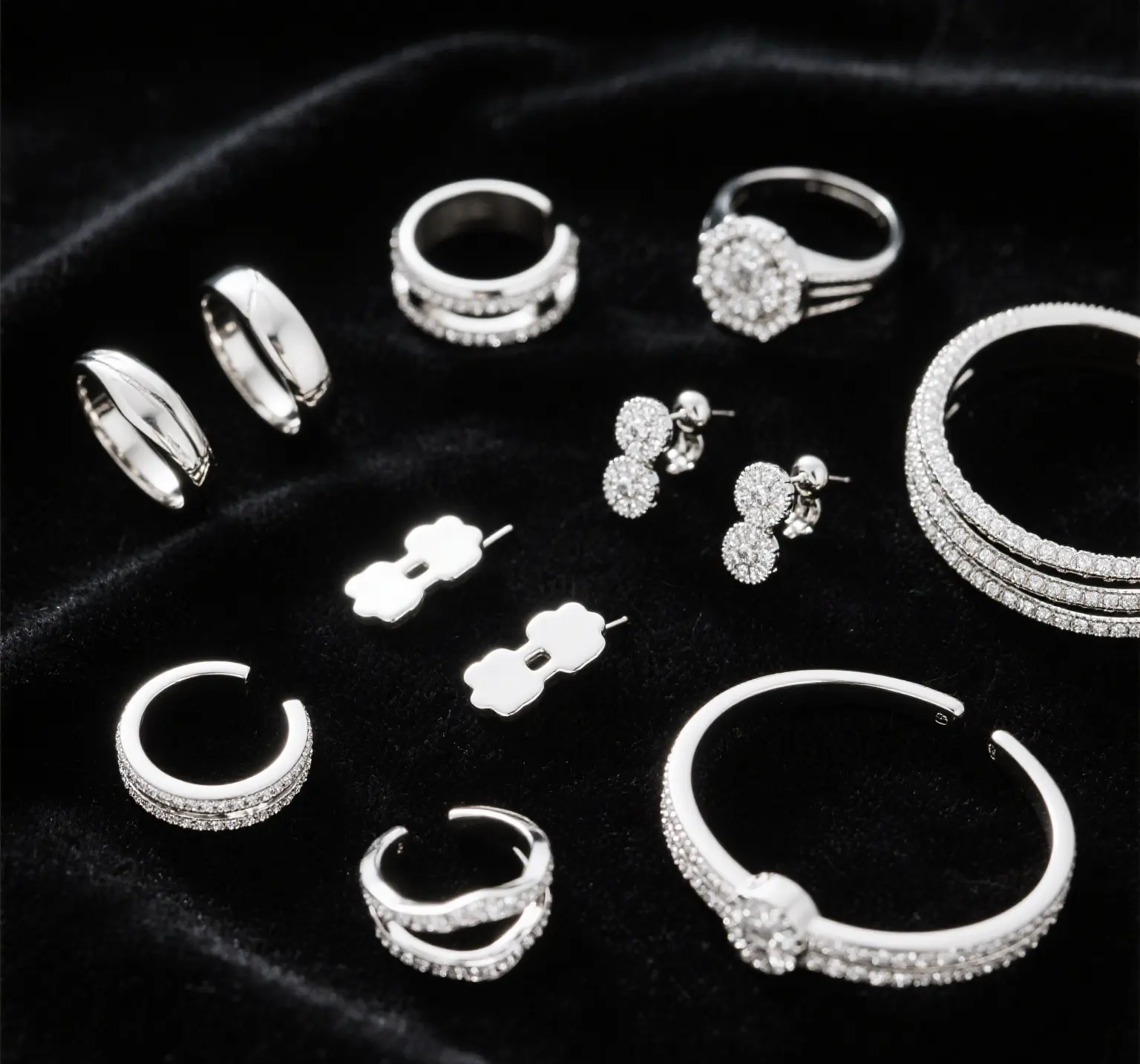
Decoding True Quality: 316L Surgical Grade vs. Cheap Alternatives
Before pulling the trigger on your inventory, you must master what you are buying. True anti-tarnish performance relies on two non-negotiable physical foundations.
The 316L vs. 304 Dilemma
Most suppliers proudly advertise “Stainless Steel,” but conveniently omit the grade. 304 stainless steel is excellent for kitchen appliances, but it fails under the continuous exposure to human sweat, perfumes, and saltwater. You need 316L Surgical Grade. The “L” stands for low carbon, and crucially, it contains 2-3% Molybdenum—the element that acts as a shield against chloride corrosion.
PVD Coating vs. Traditional Water Plating
Why does a gold-colored stainless steel ring turn silver after a month? Traditional water plating simply dips the metal into a chemical bath, leaving a fragile layer that easily chips.
Premium suppliers utilize PVD (Physikalische Gasphasenabscheidung). This vacuum coating process vaporizes the gold and binds it to the steel at a molecular level. To confidently market your pieces as “Anti-tarnish,” you must demand a PVD thickness of 0.3 to 0.5 microns. Anything less is a ticking time bomb for customer complaints.
???? Pro Tip: The Blind Spot Check
Don’t wait for lab results to spot a bad plating job. Inspect the inside of the lobster clasp and the tight spaces between chain links. Poor water plating operations always miss these spots, leaving raw metal exposed to rust immediately.
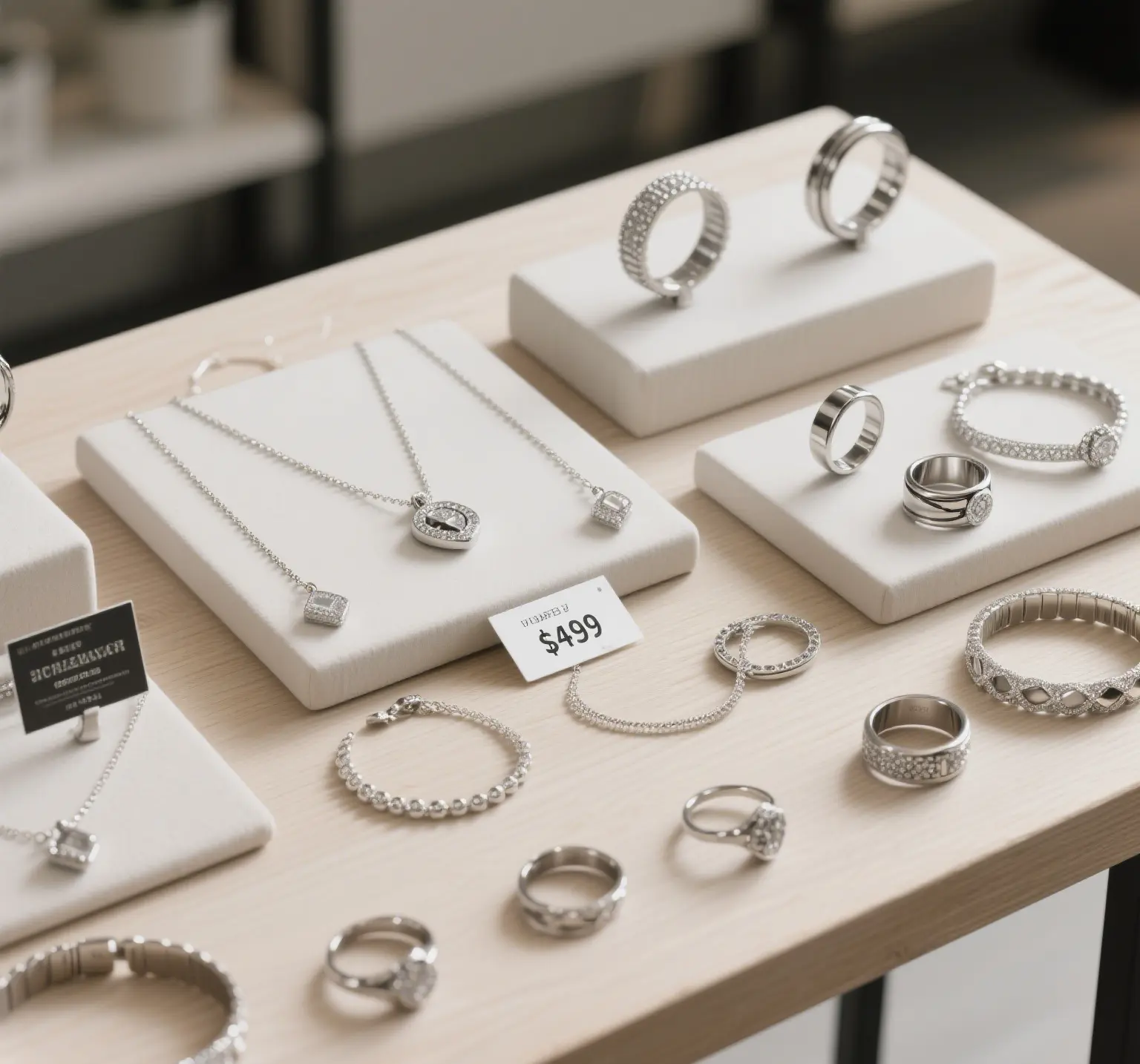
Top Sourcing Channels: The B2B Matrix
If you are searching for where to buy wholesale stainless steel jewelry, your supplier choice dictates your profit margins and compliance risks. Let’s look at the real data across different sourcing models.
| Channel Type | Min. Order (MOQ) | Vorlaufzeit | True PVD Thickness | Batch Certifications | Am besten für |
|---|---|---|---|---|---|
| Alibaba Trading Companies | 300 – 500 pcs | 30 – 45 Days | Often < 0.1 microns | Rarely provided | Generic Bulk Orders |
| Micro-Wholesale (DHgate/AliExpress) | No Minimum | 15 – 25 Days | Unreliable / Water Plating | None | Risky Trend Testing |
| Direct Factory (Azone Jewelry) | 50 – 100 pcs | 15 – 30 Days | 0.3 – 0.5 microns | Full SGS, REACH, BSCI | Agile Brand Scaling |
The Vetting Checklist for Independent D2C Brands
Ditch the generic advice. To ensure true 316L quality, your sourcing team must implement rigorous physical inspection at the sample stage.
- Lead & Cadmium Testing (Prop 65 Compliance) Never rely on factory promises. Mandatory Prop 65 screening must be performed to verify the absence of toxic heavy metals. Request REACH compliance reports for the EU market.
- XRF Coating Thickness Verification Don’t just take their word for “PVD.” Professional factories use X-ray Fluorescence (XRF) to measure the exact thickness of the gold layer. Teach your sourcing team to ask for the XRF report showing 0.3-0.5 microns.
- PMI (Positive Material Identification) & MTC Always ask your factory for the Mill Test Certificate (MTC) of the raw materials, or use a PMI gun analyzer to confirm the 2-3% Molybdenum content in the steel alloy.
Calculating Your True ROI
Scale Your Brand Safely with Azone Jewelry
Sourcing premium 316L stainless steel isn’t an expense; it’s a high-yield investment. When you buy inferior products, you pay for return shipping, absorb the cost of lost customers, and risk account bans on major platforms due to compliance violations.
Instead of abstract promises, look at the math: One of our top-performing Etsy Top Sellers und Independent D2C Brands switched from a generic trading company to Azone’s laser-cut PVD pieces. By eliminating water-plated zinc alloys, their return rate plummeted from 15% to < 0.8% within a quarter, while their profit margin per piece increased by 42% due to premium “Waterproof” positioning.
We provide full REACH, SGS, and GRS certification transparency, a strict <3% defect rate, and a 1-to-2-year PVD plating warranty.
Get Your Custom Sample Quote in 12 Hours (MOQ Starts at 50)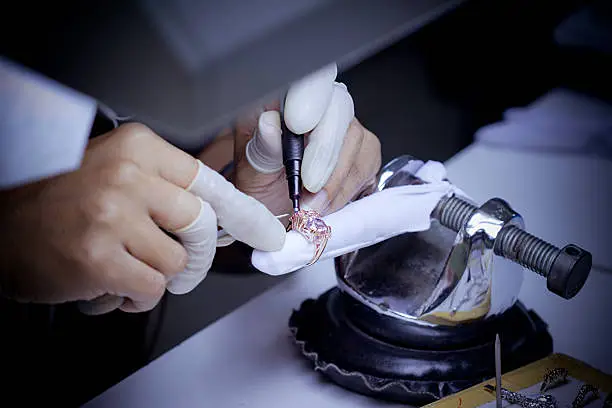

 English
  Spanish
  French
  German