.png.webp)
What Jewelry Won’t Tarnish? The Ultimate Guide to Waterproof Metals
From the hidden chemistry of base metal oxidation to the exact industrial standards brand owners must know. An authoritative supply-chain deep dive into waterproof, anti-tarnish materials.
The Hidden Chemistry of Jewelry Tarnish (And Why Fingers Turn Green)
Whether you are a jewelry brand founder tired of high customer return rates or an advanced collector seeking 24/7 wearability, understanding the anti-tarnish threshold of your materials is your first line of defense. Tarnish isn’t magic; it’s a predictable chemical reaction. When inferior base metals interact with the sulfur in the air, the salt in human sweat, or the acidity of the skin barrier, they rapidly oxidize.
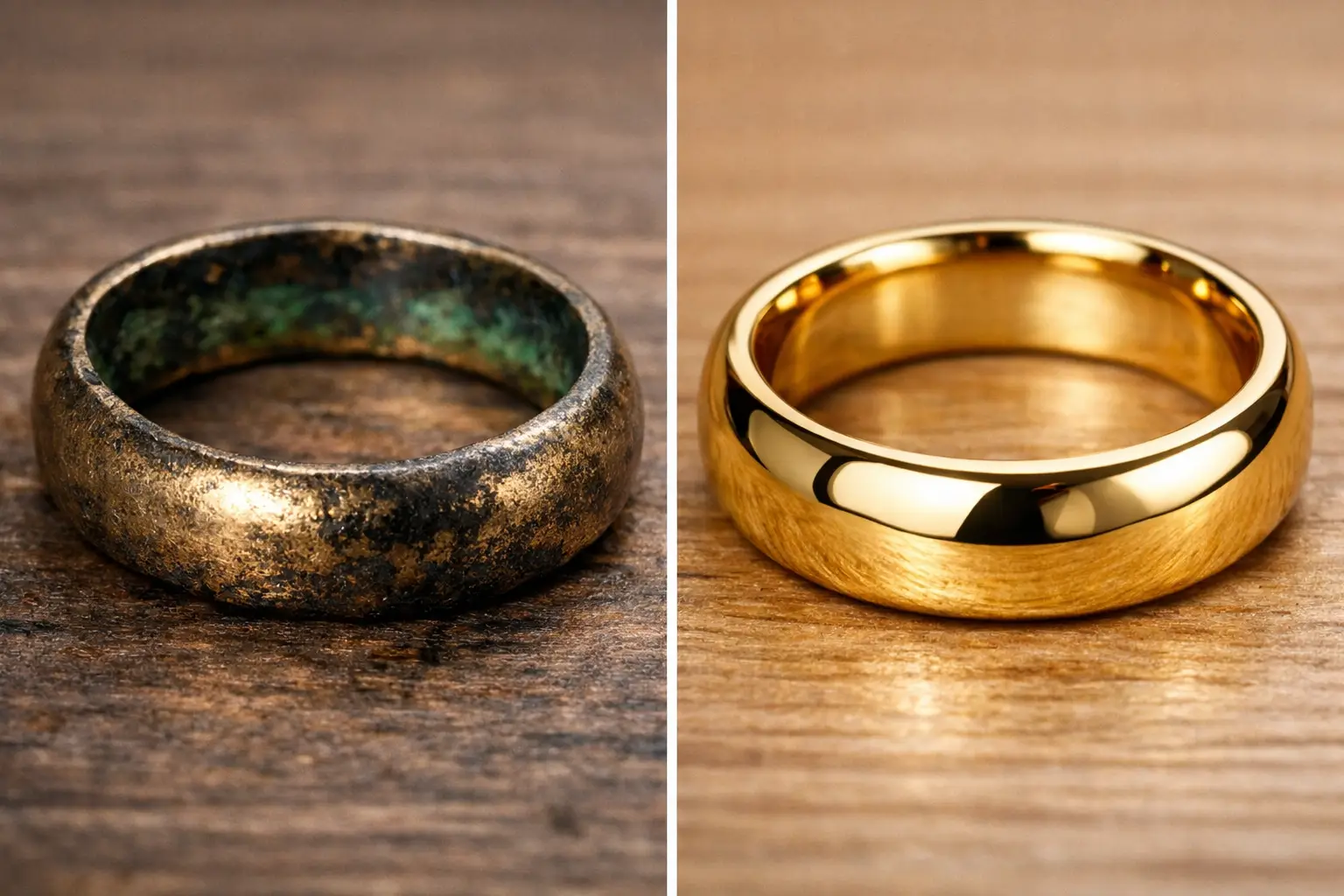
The infamous “green finger” effect is simply copper salts forming when a cheap base metal reacts with the body’s natural pH. The secret to a zero-tarnish collection, and a zero-complaint jewelry brand, lies entirely in mastering base metal oxidation limits under stress.
The Investment Tier: Precious Metals That Defy Oxidation
For fine jewelry brands catering to high-net-worth clients, ensuring absolute chemical stability is critical. These precious metals remain the undisputed standard.
Solid Gold (The Karat Sweet Spot)
While 24K gold is completely inert, its extreme softness makes it unviable for daily-wear structural pieces. To balance durability with tarnish resistance, look to the “Sweet Spot”: 14K (58.3% gold) und 18K (75% gold). Sourcing pieces below 10K significantly increases the risk of oxidation, as the higher percentage of reactive alloys becomes vulnerable to extreme environmental factors.
Platinum & Palladium (The Unreactive Kings)
Platinum sits at the absolute ceiling of oxidation resistance. Unlike white gold—which is essentially yellow gold alloyed with white metals and plated with rhodium—platinum is naturally and permanently white. It is incredibly dense, chemically unreactive, and will never expose a yellow underbelly.
925 Sterling Silver (The Sulfidation Reality)
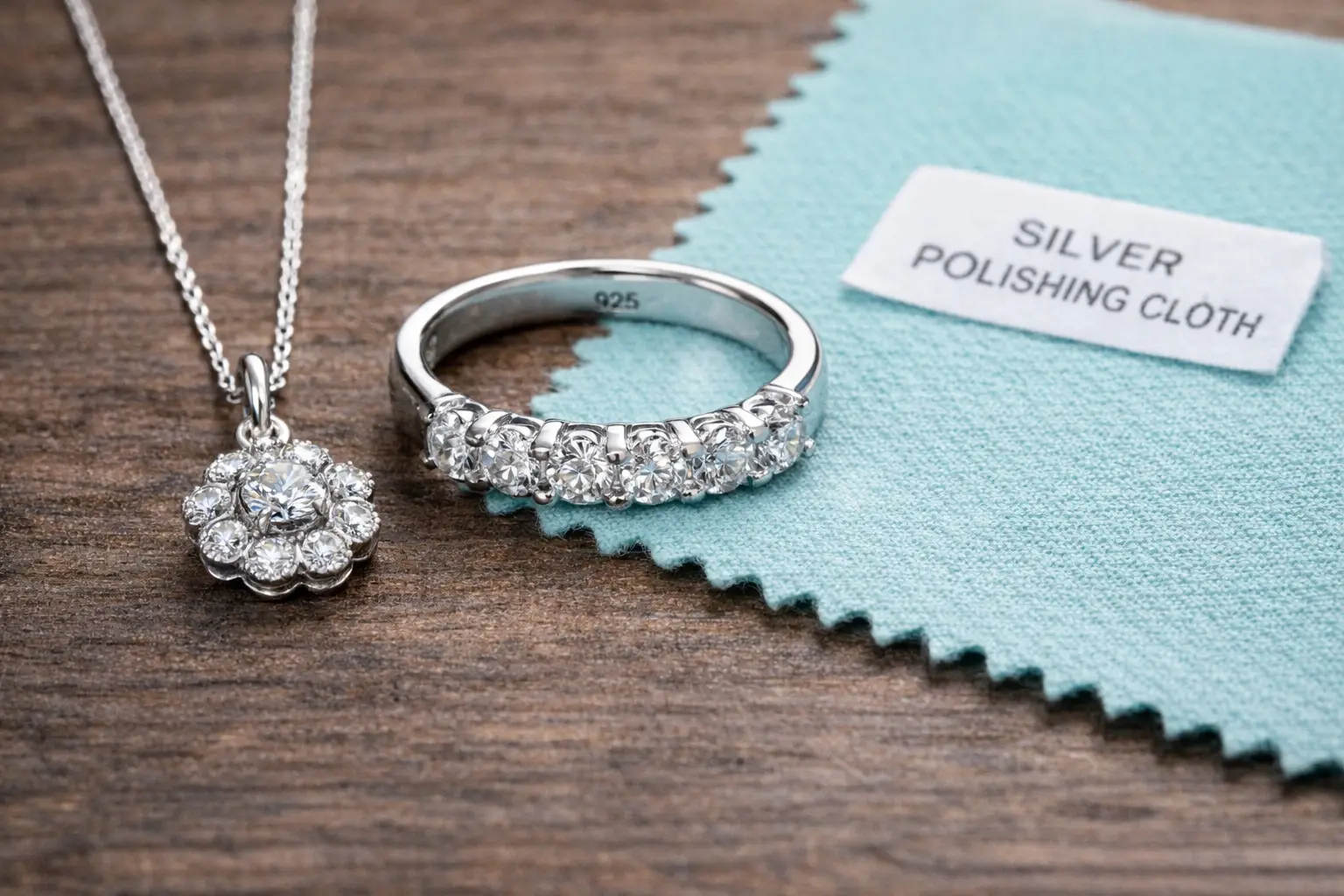
It is impossible to discuss high-quality metals without addressing 925 Sterling Silber. While it does not rust, silver undergoes a specific reaction called sulfidation when exposed to sulfur gases in the air or acidic sweat, resulting in a dark, blackened surface. However, unlike cheap plated brass that flakes off and is ruined forever, Sterling Silver is a solid precious metal. The black sulfidation layer is purely surface-level and can be 100% restored to its original brilliance with a simple polishing cloth or silver dip. It is not maintenance-free, but it offers permanent intrinsic value.
The Everyday Heroes: 316L Steel and Titanium
For modern DTC brands looking to scale, the most pressing goal is finding highly accessible solutions that survive daily wear without breaking the bank.
316L Surgical Stainless Steel (The Industry Workhorse)
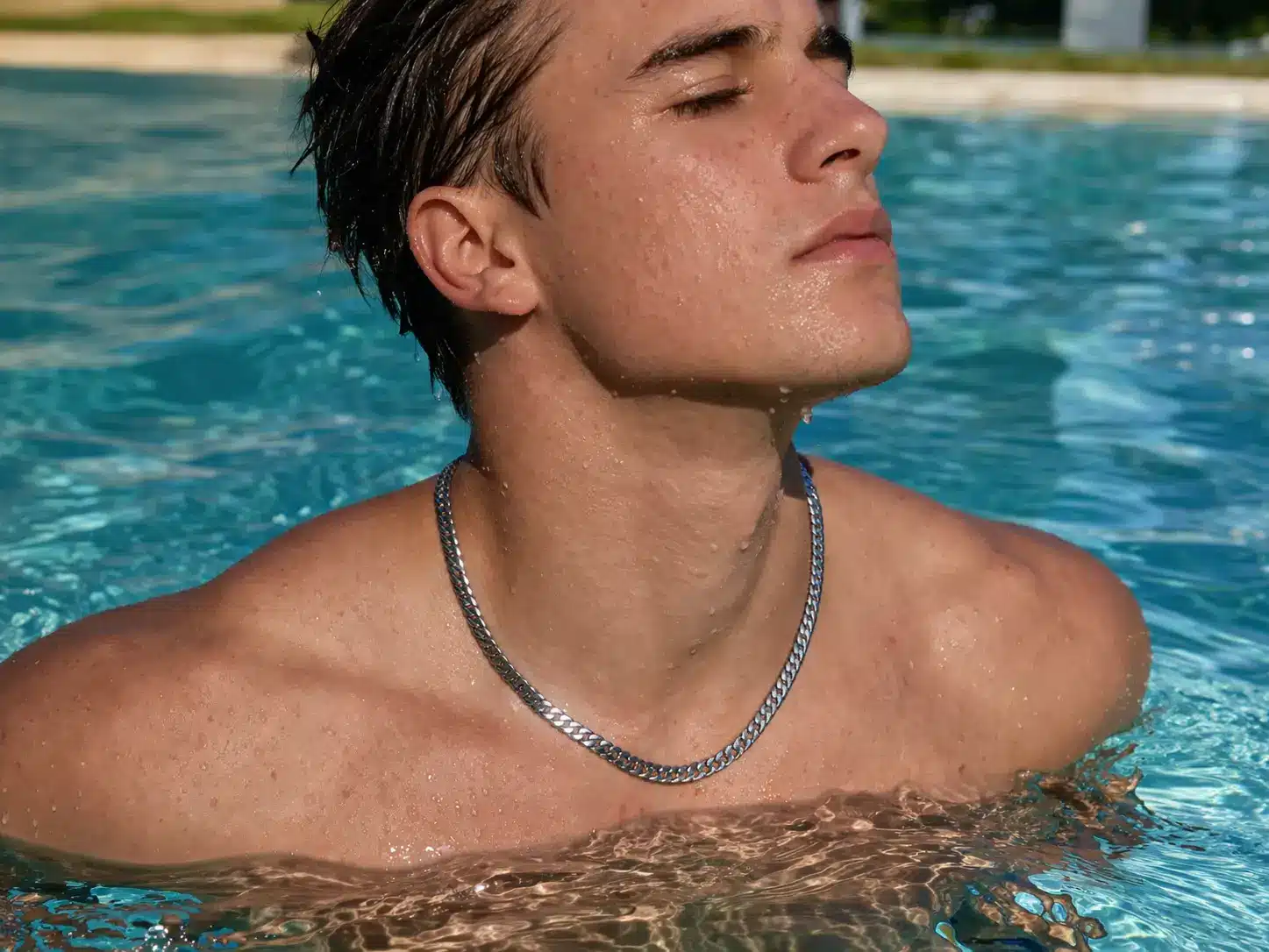
Not all stainless steel is created equal. The true hero of waterproof jewelry is 316L Surgical Grade Stainless Steel. This specific alloy contains Molybdenum, an element that acts as an ultimate shield against chloride corrosion (found in salt water and sweat).
Compliance Insight: The European Market Standard
If you are a jewelry brand owner, your baseline must go beyond “anti-tarnish” to include “legal compliance.” In mature markets like Europe, jewelry must pass rigorous REACH testing (strict limits on nickel release, lead, and cadmium).
This is exactly why top-tier designer brands partner with source manufacturers like Azone-Schmuck. With over 20 years of expertise, we keep defect rates strictly under 3% and back our manufacturing with SGS, SMETA, and GRS (Global Recycled Standard) certifications.
Titanium (The Hypoallergenic Champion)
If your target demographic struggles with severely sensitive skin, Titanium is your ultimate safeguard. It is a completely inert metal and 100% hypoallergenic. It is 45% lighter than steel but equally as strong, and completely immune to oceanic salt corrosion.
The “Fake Gold” Hierarchy: Demystifying Plating, Filling, and PVD
The biggest minefield in jewelry sourcing is navigating gold alternatives. Let’s break down the exact industrial differences so you can make data-driven procurement decisions.
Traditional Gold Plating vs. PVD Coating (The Hardcore Data)
Traditional electroplating binds a thin layer of gold to a base metal using liquid chemical baths. One deep scratch, and the base metal is exposed to oxidation.
Enter PVD (Physikalische Gasphasenabscheidung). This state-of-the-art process occurs in a vacuum chamber, vaporizing gold alloys into ions and fusing them natively through atomic-level bonding onto a titanium or 316L steel base. The result is unparalleled. When applied over a premium base, top-tier PVD coatings can withstand over 72 hours of rigorous Neutral Salt Spray Testing (NSS) without a single sign of degradation.
Gold-Filled vs. Vermeil (The FTC Standards)
By US FTC standards, Gold-Filled jewelry must contain at least 5% gold alloy (typically 12K or 14K) by weight, mechanically bonded to a brass core via extreme heat and pressure. Vermeil legally requires a base of 925 Sterling Silver covered with a thick layer (minimum 2.5 microns) of gold. While luxurious, remember that the silver core will eventually oxidize if the gold layer wears thin.
The Ultimate Anti-Tarnish Metal Matrix (Hard Data)
Now that you understand the underlying chemistry, here is the definitive data matrix. We have removed vague adjectives and replaced them with exact industrial benchmarks to help you source smarter.
| Base Metal / Material | Freshwater (Shower) | Acidic (Sweat/pH) | Ocean (Salt/NaCl) | Pool (Chlorine/Cl) |
|---|---|---|---|---|
| Solid Gold (14K/18K) | Inert (0 Oxidation) | Inert | Resistant (May dull slightly) | Critical Risk (Causes micro-cracks) |
| 316L Surgical Steel (PVD) | Passes 24h Immersion Test | Passes Artificial Sweat Test | Passes 72h Salt Spray Test | Outstanding Resistance |
| Titan | 100% Immune | 100% Immune | 100% Immune | 100% Immune |
| 925 Sterling Silber | Safe (Dry immediately) | Rapid Sulfidation (Blackens) | Severe Corrosive Blackening | Rapid Chlorination & Pitting |
| Gold-Filled (14K) | Resists > 6 Months | Brass Core Risk under heavy wear | Rapid Degradation | Core Compromise |
| Gold-Plated Brass | Oxidizes < 24h | Turns Skin Green (Copper Salts) | Instant Failure | Instant Failure |
Stop Sourcing Junk. Build a Zero-Complaint Collection.
Scaling a jewelry brand requires a flawless, compliant, and technologically advanced supply chain. High return rates due to tarnishing or allergic reactions can destroy a brand’s reputation overnight.
Unter Azone-Schmuck, our 1,500 sq.m facility and 500,000-piece monthly capacity allow us to deliver incredibly stable PVD solutions on premium 316L and Titanium bases through precise atomic-level bonding.
- Guaranteed Durability: We confidently offer a strict 2-year plating warranty.
- Brand-Friendly Scaling: Flexible MOQs as low as 50-100 pieces per style.
- Globale Einhaltung: Fully REACH, SGS, and SMETA certified for EU/US markets.


 English
  Spanish
  French
  German