.png.webp)
What Is Stainless Steel Jewelry: The Truth About Quality, Durability, and Value
01 What Is Stainless Steel Jewelry? A Look at the Metal Behind the Design
Stainless steel jewelry is exactly what it sounds like — jewelry crafted from stainless steel, an iron-based alloy that contains at least 10.5% chromium. That percentage isn’t arbitrary. It’s the threshold defined by ASTM International’s A240 standard, and it’s the reason stainless steel doesn’t rust.
Here’s what happens: when chromium meets oxygen, it forms an invisible layer of chromium oxide on the metal’s surface — a shield roughly 2 to 5 nanometers thick. If that shield gets scratched, it repairs itself in under a second. Fresh chromium rushes to the surface, binds with oxygen again, and the protective layer is restored. Regular steel rusts because iron oxide (what we call rust) flakes away and exposes more iron underneath. The chromium in stainless steel flips that script — it sacrifices itself so the iron doesn’t have to.
For jewelry, two grades dominate the market. 304 stainless steel — also known as food-grade — is common in fashion pieces. 316L stainless steel is the premium option. The “L” stands for low carbon (no more than 0.03%), and the grade includes 2–3% molybdenum, which dramatically improves corrosion resistance. This is the same material used in surgical implants and marine equipment. When you see “surgical steel” on a jewelry tag, they’re talking about 316L.
Stainless steel jewelry isn’t a gimmick. It’s a material with a genuine engineering story behind it.
02 Why Stainless Steel Has Become a Jewelry Favorite
When you’re choosing jewelry, four things tend to matter most: will it last, will it stay looking good, will it irritate your skin, and is it worth the price? Stainless steel performs unusually well across all four — and that’s not marketing, it’s materials science.
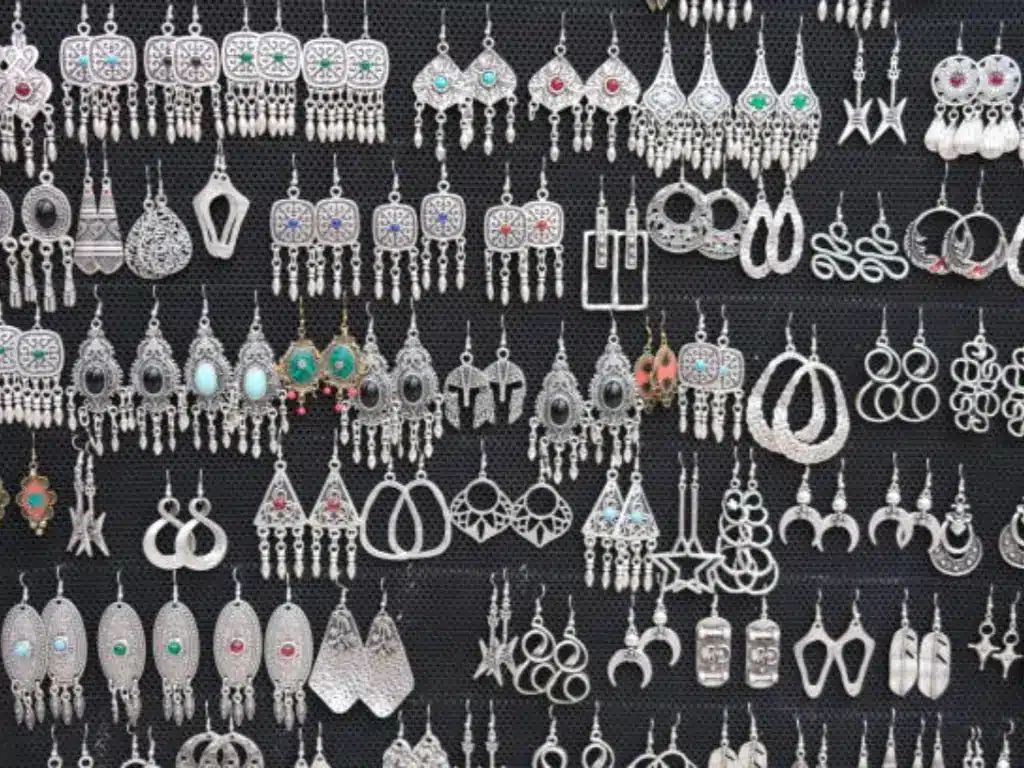
Extreme Durability That Handles Daily Life
Stainless steel sits at about 5.5 to 6.5 on the Mohs hardness scale. For context: sterling silver and gold both clock in around 2.5 to 3.0. Stainless steel is roughly twice as hard — it won’t bend when you snag a necklace on a sweater, and it won’t dent when a ring meets a doorknob.
In industrial terms, 316L stainless steel has a Vickers hardness of approximately 150 to 200 HV. 925 sterling silver sits around 70 to 80 HV. The practical difference: a silver ring shows wear within months of daily use. A stainless steel ring can go years without visible deformation.
No metal is scratch-proof. Stainless steel will accumulate fine surface scratches over time, just like a phone screen does. But those scratches are physical marks — not corrosion. They don’t deepen or spread the way tarnish does on silver.
Tarnish-Free: The Chromium Shield Explained
Silver turns black. It’s the single most frustrating thing about owning silver jewelry. The culprit is a chemical reaction called sulfidation: silver binds with hydrogen sulfide in the air (4Ag + 2H₂S + O₂ → 2Ag₂S + 2H₂O), forming a layer of black silver sulfide on the surface.
Stainless steel sidesteps this entirely. The chromium oxide layer — the same one that prevents rust — also prevents the kind of surface discoloration that plagues silver and brass. And unlike silver, which needs regular polishing (which actually removes microscopic layers of the metal each time), stainless steel’s protective layer regenerates passively.
One caution: prolonged exposure to chlorine — think hot tubs, bleach-based cleaners, or heavily chlorinated pools — can break down the chromium oxide faster than it can repair itself. For everyday swimming, showering, and sweating, stainless steel is effectively immune.
Hypoallergenic and Safe for Sensitive Skin
Roughly 10 to 20 percent of the population has some degree of nickel sensitivity, and nickel is present in most metal alloys — including stainless steel. So how can stainless steel be “hypoallergenic” if it contains nickel?
The answer is in how the nickel is held. In 316L stainless steel, nickel (about 10–14% of the alloy) is locked tightly within the metal’s crystal structure. It doesn’t leach out onto the skin. The European standard EN 1811 sets a nickel release limit of less than 0.5 micrograms per square centimeter per week for items intended to be in prolonged skin contact — and properly manufactured 316L jewelry consistently meets this threshold.
For people with severe nickel allergies, the safest path is to stick with 316L specifically (not generic “stainless steel,” which could be a lower grade like 201 or 304) and to verify the grade marking on the piece itself. If you see “316L” or “surgical steel” stamped on the inside of a ring or the clasp of a necklace, you’re in safe territory.
Affordable Luxury Without Compromise
A stainless steel ring typically costs $10 to $50 retail. A comparable sterling silver ring: $30 to $150. A 14K gold ring: $200 and up, often much higher. The price gap isn’t about quality — it’s about raw material economics.
Stainless steel raw material costs roughly $0.001 to $0.003 per gram. Silver, by comparison, trades at about $0.70 to $0.80 per gram on commodity markets. That’s a 300-to-700-fold difference in raw material cost alone, before you factor in the labor efficiency of modern automated jewelry production. Stainless steel jewelry’s affordability isn’t a signal of low quality. It’s the result of abundant raw materials and industrialized manufacturing — a efficiency dividend passed on to you.
Modern Style Versatility From Matte to Mirror
If your mental image of stainless steel jewelry is limited to chunky industrial chains, it’s time to update that picture. Modern stainless steel jewelry comes in a wide range of finishes:
- Mirror polish — a liquid-metal shine that reads as sleek and contemporary
- Brushed / matte — a subtle, low-key texture that hides fingerprints
- PVD vacuum plating — available in gold, rose gold, black, and other tones, with a coating 0.3 to 3 micrometers thick and up to 5 to 10 times the bonding strength of traditional electroplating
- Sand-blasted — a soft, frosted surface
- Antique / oxidized — darkened recesses that bring out engraved details
Stainless steel also takes well to stone setting — cubic zirconia, pearls, and semi-precious stones can all be set into stainless steel mounts. The design ceiling is far higher than most people assume.
03 The Downsides: What Stainless Steel Jewelry Gets Wrong
No material is perfect. Stainless steel has four real limitations you should know about before buying — none of them are dealbreakers, but all of them matter in specific situations.
Resizing Is Nearly Impossible — Get Your Size Right
This is the single biggest practical drawback of stainless steel rings. Gold and silver rings can be resized because they’re soft enough to cut, stretch or compress, and re-solder at temperatures of 600 to 900°C. Stainless steel melts at approximately 1400 to 1450°C, and even if you could cut and re-weld it, the heat would destroy the chromium oxide layer at the weld point — creating a spot that would rust.
What this means if you’re ring shopping: measure your finger size carefully before ordering.
Heavier Feel — Not Everyone’s Preference
Stainless steel has a density of about 7.9 to 8.0 grams per cubic centimeter. That’s heavier than titanium (4.5 g/cm³) but lighter than sterling silver (10.4 g/cm³) and significantly lighter than 14K gold (13–14 g/cm³). For small pieces like stud earrings or delicate chains, the weight difference is imperceptible. For chunky bracelets or oversized pendants, you might notice the heft — some people enjoy the substantial feel, while others find it fatiguing after a full day of wear.
Not a Precious Metal — and That’s Okay
Stainless steel will never be an heirloom investment piece. It doesn’t appreciate in value. It doesn’t carry the cultural weight of gold or platinum. If you’re buying jewelry primarily as a store of wealth, stainless steel is the wrong material.
But most people don’t wear jewelry as an investment. They wear it because it looks good and makes them feel good. And on that metric, stainless steel delivers — often at one-tenth the price of precious metal equivalents. Plenty of designer brands sell stainless steel pieces for $100 or more, because the value is in the design and craftsmanship, not the raw material cost per gram. A canvas tote bag isn’t less useful than a leather one — it just serves a different purpose.
Watch Out for Low-Quality “Mystery Steel”
Not all stainless steel is created equal, and the jewelry market has plenty of bottom-tier product. At the low end, manufacturers may use 201-grade stainless steel, which contains only 16–18% chromium (compared to 18–20% in 304) and 3.5–5.5% nickel in a less stable form — meaning it can corrode and cause skin reactions. Cheap PVD gold plating may be as thin as 0.1 micrometers and wear off within weeks.
| Grade | Chromium | Nickel | Verdict |
|---|---|---|---|
| 201 | 16–18% | 3.5–5.5% | Risk of corrosion |
| 304 | 18–20% | 8–10.5% | Food-grade, reliable |
| 316L | 18–20% | 10–14% | Premium, surgical-grade |
Two quick rules protect you: first, look for a grade stamp — “316L” or at minimum “Stainless Steel” engraved on the piece itself. Second, apply common sense on price. A “316L stainless steel necklace” selling for $1.99 almost certainly isn’t. Quality stainless steel jewelry doesn’t need to be expensive, but it can’t be suspiciously cheap either.
04 Stainless Steel vs. Other Metals: A Side-by-Side Look
If you’re weighing options, here’s how the most common jewelry metals compare:
| Dimension | Stainless Steel (316L) | 925 Sterling Silver | 14K Gold | Titanium |
|---|---|---|---|---|
| Color | Silver-gray | Bright white-silver | Warm yellow | Darker gray |
| Hardness (Mohs) | 5.5–6.5 | 2.5–3.0 | 2.5–3.0 | 6.0 |
| Tarnishes? | No | Yes — turns black | No | No |
| Hypoallergenic? | Yes (316L) | Sometimes (contains copper) | Usually yes | Yes |
| Resizable? | Very difficult | Easy | Easy | Difficult |
| Price (ring) | $10–$50 | $30–$150 | $200+ | $50–$200 |
| Best for | Daily wear, active lifestyle, budget-conscious | Traditional jewelry, formal occasions, resizable pieces | Investment, heirloom, special occasions | Ultra-lightweight, severe nickel allergy |
The bottom line: stainless steel wins on durability and value. It loses on prestige and resizability. If you want a piece you can wear every day without thinking about it — through showers, workouts, and everything in between — stainless steel is the strongest contender. If you want a ring you can pass down to a grandchild, go with gold.
05 From Factory Floor to Jewelry Box: How Stainless Steel Jewelry Is Made
Most articles about jewelry skip the manufacturing process. The journey from raw metal to finished piece tells you more about quality than any list of pros and cons ever could.
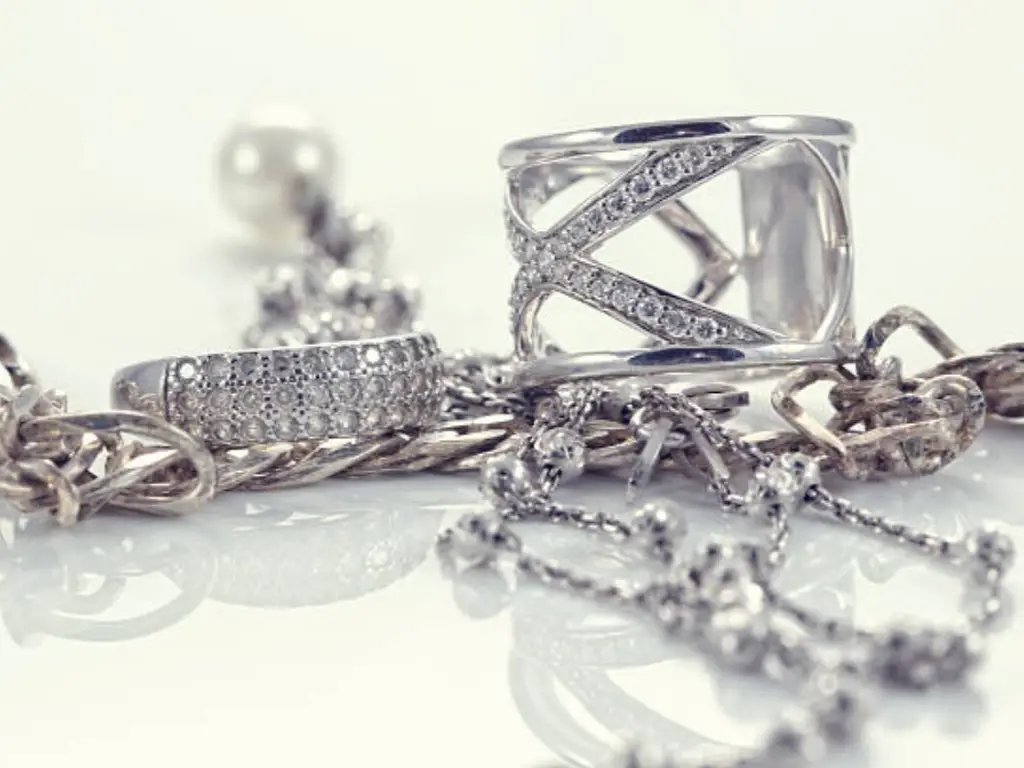
From Raw Metal to Workable Material
Stainless steel jewelry starts as sheets, rods, or wire — industrial-grade raw material sourced from steel mills. From there, three primary forming methods take over:
Mold casting pours molten stainless steel (at roughly 1450–1500°C) into pre-made molds, capturing complex three-dimensional shapes in a single pour. This is how signet rings, detailed pendants, and sculptural pieces are born. Laser cutting uses a focused beam with positioning accuracy of ±0.05 millimeters to carve precise shapes directly from flat steel sheet — ideal for pendants, charms, and geometric earrings. Stamping presses sheet metal into shape using dies under 25 to 200 tons of pressure, the go-to method for high-volume uniform pieces like simple hoop earrings or basic bangles.
Shaping and Assembly — Where Craftsmanship Shows
Once the basic forms exist, they move into precision shaping. CNC (computer numerical control) machines — running at 8,000 to 24,000 RPM for jewelry-grade work — carve intricate patterns, engravings, and fine details that no human hand could replicate at scale. Laser welding joins components with a heat-affected zone smaller than 0.1 millimeters, preserving the chromium oxide layer at the joint.
Then comes the human work. Skilled workers file off mold lines and burrs, polish surfaces to uniformity, and inspect each piece under magnification. This is the stage that separates a $5 piece from a $50 piece — the difference between a rough casting straight from the mold and a hand-finished piece with smooth edges, even surfaces, and no visible tool marks.
Surface Finishing — The Magic Touch
Surface finishing is where stainless steel jewelry earns its visual identity. Mechanical polishing with progressively finer abrasives produces a mirror finish. Wire brushing or media blasting creates a matte or satin surface. For colored stainless steel, PVD (Physical Vapor Deposition) is the gold standard — literally. The process vaporizes a coating material (like titanium nitride for gold tones) in a vacuum chamber, where it bonds to the stainless steel surface at 200 to 500°C. The resulting coating has a hardness of 2000 to 3000 HV — far harder than the steel underneath — and color consistency within ΔE < 1.0, meaning your eye can’t detect any variation from piece to piece. A quality PVD finish lasts two years or more of daily wear. Cheap electroplating, by contrast, can start flaking in weeks.
Quality Control — The Gate Before It Reaches You
Before any piece leaves a professional factory floor, it passes through multiple checkpoints. Visual inspection catches surface defects, polish inconsistencies, and stone-setting errors — done both by eye and under magnification. Chemical compliance testing verifies that lead, cadmium, and nickel release levels fall within EU REACH regulation (EC 1907/2006) and RoHS directive (2011/65/EU) limits. For corrosion resistance, pieces may undergo salt spray testing per ISO 9227 — surviving 48 to 96 hours in a neutral salt fog without rust points is the standard benchmark for jewelry-grade stainless steel.
- Visual Inspection — surface defects, polish consistency, and stone-setting errors checked under magnification
- Chemical Compliance — lead, cadmium, nickel release verified per REACH (EC 1907/2006) and RoHS (2011/65/EU)
- Salt Spray Testing — ISO 9227 certified, surviving 48–96 hours in neutral salt fog without rust points
Every necklace, ring, or bracelet you buy has been through at least three pairs of hands — the person who shaped it, the person who polished it, and the person who inspected it. That’s the minimum at any factory that takes quality seriously. At lower-end operations, some or all of these steps get compressed — and the final product shows it.
Curious about the exact steps involved? See our deep dive into how to make stainless steel jewelry, covering everything from DIY techniques to factory-scale production.
06 How to Choose Quality Stainless Steel Jewelry: A Practical Checklist
You’ve made it through the full story — what stainless steel jewelry is, why it works, where it falls short, how it compares, and how it’s made. Here’s a six-point checklist to take with you the next time you’re shopping, whether online or in-store:
- Check for a grade stamp. Look for “316L” or “Stainless Steel” engraved on the piece — no stamp at all is a red flag.
- Ask the seller about the grade. If they can’t tell you whether it’s 304 or 316L, assume the worst.
- Inspect the finish. Uniform polish, consistent color, and smooth edges are the baseline for quality manufacturing.
- Verify the plating method. If it’s gold or rose gold, ask whether it’s PVD vacuum plated (good) or standard electroplating (not as durable).
- Look for compliance certifications. REACH and RoHS compliance mean the piece has been tested for harmful substances.
- Trust the weight. Quality stainless steel has a satisfying heft — if a chunky-looking piece feels hollow and weightless, something’s off.
Good stainless steel jewelry doesn’t have to cost a fortune. But it should make its quality legible — through the materials it uses, the finish it shows, and the information the seller provides. If those things are present, you’ve found a piece worth your money.
Whether you’re shopping for yourself or sourcing for a brand, the quality of stainless steel jewelry starts with the manufacturer behind it. Azone Jewelry, for example, brings over 20 years of production experience to the table — offering more than 40,000 designs, nickel-free hypoallergenic finishing on 316L surgical-grade stainless steel, and PVD vacuum plating backed by a two-year warranty. If you’re interested in custom jewelry manufacturing, their catalog and capabilities are worth a look.
- ASTM International. “A240/A240M Standard Specification for Chromium and Chromium-Nickel Stainless Steel Plate, Sheet, and Strip for Pressure Vessels and for General Applications.”
- European Committee for Standardization. “EN 1811: Reference test method for release of nickel from all post assemblies which are inserted into pierced parts of the human body and articles intended to come into direct and prolonged contact with the skin.”
- International Organization for Standardization. “ISO 9227: Corrosion tests in artificial atmospheres — Salt spray tests.”
- European Union. “REACH Regulation (EC 1907/2006).”
- European Union. “RoHS Directive (2011/65/EU).”
- Azone Jewelry. https://azonejewelry.com/
- Azone Jewelry — Custom Jewelry. https://azonejewelry.com/custom-jewelry/
- Azone Jewelry — About Us. https://azonejewelry.com/about-us/
- Azone Jewelry — Contact. https://azonejewelry.com/wholesale-jewelry-contact/


 English
  Spanish
  French
  German