.png.webp)
Einführung
Is your stainless steel necklace no longer shiny, or even worse, has small scratches on its surface, which are caused by daily use? Numerous home remedies on the internet claim to fix things in a few minutes, yet most of these untested solutions will permanently damage your products. This guide is a combination of practical home maintenance tips and real material science and factory-level information of Azone Jewelry, a professional jewelry manufacturer that has been producing high-quality jewelry since 2003. We will offer a rigid, step-by-step process of cleaning to the most sophisticated scratch removal, and demonstrate to you how to deal with delicate plated objects without breaking them.
Diagnose Your Jewelry Before Polishing
You have to diagnose the physical state of your object before you can polish stainless steel or use any cleaning solution. This is the main stage that people should not skip because they will ruin their favorite pieces forever.
| Diagnostic Check | Visual Identification | Strict Polishing Rule |
| 1. Solid Steel vs. PVD Coating | Determine if you are holding bare stainless steel or an item with a Physical Vapor Deposition (PVD) gold or rose-gold coating. | This thin protective layer is highly vulnerable to friction. You must absolutely avoid using any mild abrasive. Attempting to buff a plated item will immediately strip the coating and expose the bare steel. Plated items require gentle methods only. |
| 2. The Metal “Grain” | Examine the surface under a bright light. It will either display a highly reflective mirror finish or a textured brushed appearance (often called a satin finish). | You must always move your soft cloth parallel to these directional lines. Never use a circular motion; this will cross the grain and create permanent micro-scratches on the finish of your stainless steel. |
| 3. Gemstones and Adhesives | Inspect the item for delicate components such as rhinestones, inlaid cubic zirconia, or epoxy details. | Many commercial cleaners and hot liquids will dissolve the adhesives used to secure stones. If your item contains glued elements, restrict your cleaning to the metal surfaces only, avoiding settings entirely. |
Beyond the surface finish, your jewelry’s physical shape matters. For necklaces, diagnosing your chain link structure is crucial before cleaning, as delicate styles like Snake or Herringbone require much gentler handling to avoid permanent kinks.
Level 1: Routine Cleaning (Restoring the Basic Shine)
This tier includes the needs of routine maintenance. When the jewelry pieces appear dull, they do not actually require being polished. They only need the elimination of the body oils, sweat, and environmental dust. The most efficient and safest methods of cleaning stainless steel include simple household materials that are performed in a rigid order.
- Prepare the Solution: Add two drops of mild dish soap to a small bowl of warm water. Do not apply antibacterial soap or heavy-duty degreasers. Add the soapy water and mix until suds.
- Submerge and Loosen: Add the steel jewelry to the solution and leave it there five minutes to loosen surface grime.
- Brush the Surface: Cleanse the intricate patterns and complex details where dirt collects using a baby toothbrush with extremely soft bristles. Use light pressure to prevent disturbance of the metal surface.
- Rinse: Run the item under a small amount of running water to get all the soap out.
- Dry Manually: It is not a good idea to leave stainless steel pieces to dry on their own. Tap water contains minerals that evaporate leaving hard water spots that make the metal look cloudy. Manual drying should always be the last stage of normal cleaning. As soon as it has been rinsed, wipe the item with a soft microfiber cloth to remove all the moisture. Do not rub vigorously; press until the metal is dry.
Level 2: Real Polishing (Removing Micro-Scratches & Oxidation)
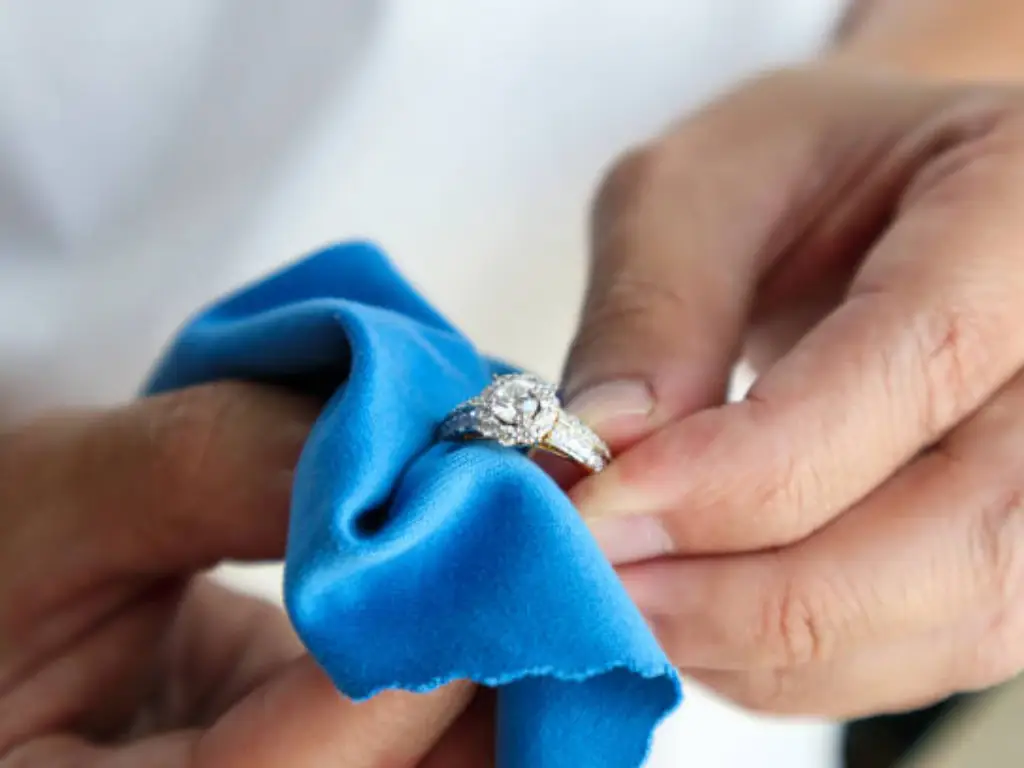
In case the brilliant shine is not restored after the regular cleaning, it is probable that the surface has small scratches and slight oxidation. This involves a small amount of abrasive to physically smooth the microscopic irregularity on the metal. Depending on the available materials, select one of the two approved methods.
- The Baking Soda Paste Technique: Baking soda is a good, easily obtainable abrasive with a Mohs hardness of precisely 2.5. Since the stainless steel has a Mohs hardness of 5.5 to 6, baking soda is tough enough to take away the oxidized surface material but soft enough not to gouge deep. Combine two parts baking soda and one part water to create a thick and uniform paste. Put a little of this paste on the metal. Apply the paste with a soft cloth rubbing it strictly against the grain of the metal with light pressure. Repeat this two minutes. Wash under a lot of water and dry using a microfiber cloth.
- Professional Jewelry Polishing Cloths: To achieve the best results, you are supposed to use a specialized jewelry polishing cloth. These fabrics are pre-impregnated with micro-abrasives and chemical cleaning agents that are designed to work with hard metals. Rub the treated part of the cloth on the metal with moderate pressure, but you have to go against the grain. Then wipe the surface with the untreated side, or with another dry cloth, to a beautiful luster. This is the very process that any professional jeweler would recommend to do to maintain safely at home.
Level 3: Deep Scratches & The Factory Polishing Reality (Bare Steel ONLY)
Deep scratches on the surface cannot be eliminated using a basic stainless steel cleaner. You have to know how the metal was processed in the first place to know how to deal with deep physical damage.
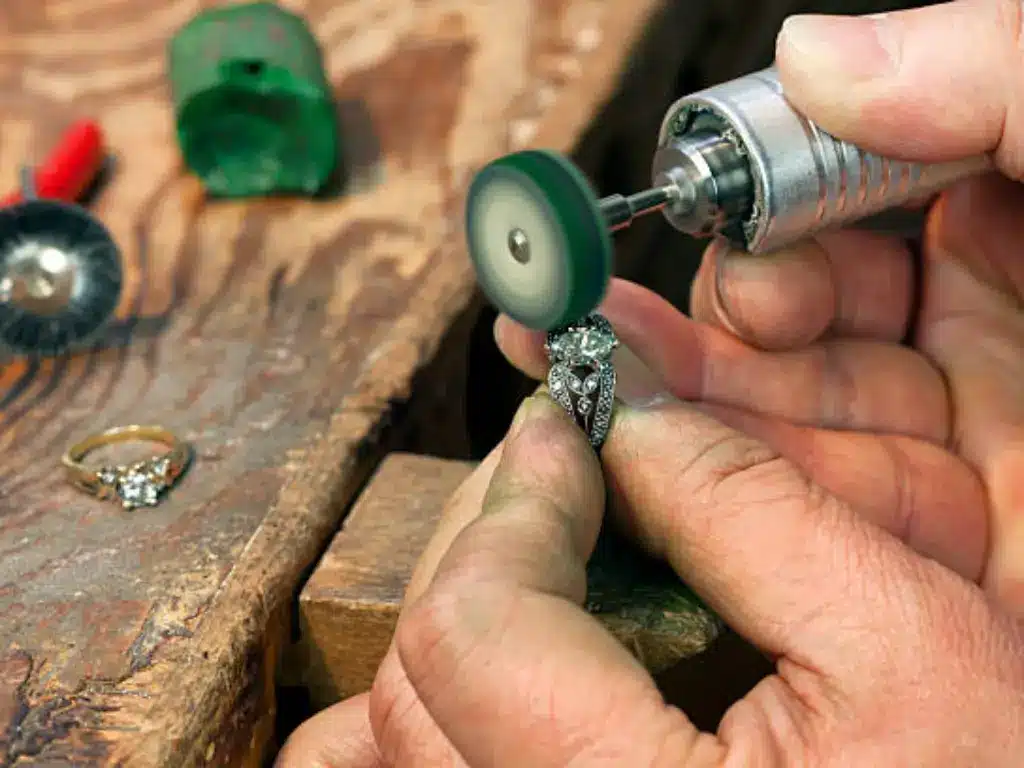
- The Standard Factory Polishing Process: Polishing of true metals is heavy industry. CNC machines and laser cutters produce stainless steel parts that have rough surfaces and sharp edges. To get a perfect finish, it is a multi-stage process. Technicians apply heavy machinery with a high-speed buffing wheel. They use a certain grade of industrial polishing compound (green or white rouge) and press the metal on the spinning wheels. They are then subjected to coarse grinding, deburring and fine buffing until the stainless steel has a perfect mirror finish. This is a very vigorous mechanical operation that flattens the steel and prepares the surface to be electroplated in PVD.
- At-Home Advanced Repair (Proceed with Caution): In case of deep scratches on your unplated, solid stainless steel jewelry, you can try to recreate the factory procedure with a handheld rotary tool (such as a Dremel). You will require a felt polishing bit and a small portion of white polishing compound. But you should be very careful. Using a rotary tool at home does not have the accuracy of speed and stability of factory equipment. Excessive pressure or keeping the tool in a single position will produce excessive heat that may cause the metal to be warped or form deep and uneven depressions. When you are not sure about using the appropriate polishing methods, then you are supposed to take the item to a professional. This should not be applied to plated items.
- The Limitations of an Ultrasonic Cleaner: An ultrasonic cleaner is a cleaning solution that employs high-frequency sound waves to form microscopic bubbles in a cleaning solution. This move quickly removes hard-to-cleanse dirt in crevices. Although an ultrasonic machine is a great device in deep cleaning, it is totally useless in physical polishing. It will clean the oils and dirt, but it will not change the physical structure of the metal to repair the surface scratches.
This is the level of industrial polishing that is done right that will make the difference between high-quality manufacturing and low-quality manufacturing. This is the same multi-stage polishing process that is strictly followed in the Azone Jewelry plant, which is 1500 square meters in size and has a workforce of more than 10 years of experience. Azone makes sure that the final product has a perfect structural base by carefully leveling and buffing the raw steel before any coating is applied to it. It is this rigorous factory-level preparation that makes high-quality pieces last longer before degrading, and thus, much less aggressive at-home repair is required.
Essential Maintenance: Preventative Care and the “Do NOT Use” Blacklist
Preventive treatment avoids the use of aggressive polishing. Even a small amount of care can help to maintain the integrity of the metal. Wearing the incorrect materials will result in irreversible structural damage, and you should adhere to these rules when wearing every day and prevent the myths that destroy the internet.
- Never Use Plain White Toothpaste: Ignore internet advice recommending toothpaste. It contains silica, a strong abrasive. Rubbing this against your jewelry creates permanent microscopic pits that trap dirt and permanently destroy the finish.
- Avoid Harsh Chemicals (Bleach and Chlorine): Keep your jewelry entirely away from chlorinated pools, hot tubs, and household bleach. These harsh chemicals physically destroy the chromium oxide layer—the invisible protective barrier that prevents stainless steel from rusting. Once this layer is compromised, the metal will oxidize and rust rapidly.
- Manage Cosmetic Exposure: Apply all perfumes, hairsprays, and lotions, and allow them to dry completely before putting your jewelry on to prevent chemical buildup on the metal.
- Store Correctly: When not in use, store your items in an airtight bag away from direct sunlight and high humidity to prevent environmental oxidation.
- Maintain Hygiene for Sensitive Skin: Because stainless steel is hypoallergenic, it is excellent for sensitive skin. Maintaining regular cleanliness ensures no trapped irritants cause skin reactions during your daily wear.
Are You a Jewelry Brand? Source Better Steel from the Start
When you run a jewelry brand and your customers keep on complaining that the jewelry is losing its shine or getting spoilt easily, then it is not their care regimen. The underlying cause is probably low-quality base steel or inadequate performance of electroplating at the production stage.
Azone Jewelry is a high-end stainless steel jewelry manufacturer that has been in operation since 2003. Our monthly output is 500,000 pieces and we have a defect rate of less than 3%. Our materials are certified by REACH and ROHS, and they are in line with the high international standards. We have very flexible Minimum Order Quantities (MOQ) as low as 50 to 100 pieces with quick sampling of 7 to 14 days. Our PVD electroplating process involves intensive artificial sweat and wear testing, which is supported by a 1 to 2-year quality warranty.
[Contact Us to Upgrade Your Jewelry Quality Today / Request a Free Quote]
Schlussfolgerung
To keep your stainless steel jewelry, you have to literally follow a few rules. You need to know properly whether your work is solid steel or plated, not apply abrasive materials to coated surfaces, and not accept destructive internet hacks with toothpaste and bleach. With the help of mild soap, correct drying methods, and special polishing cloths, your objects will not lose their structural integrity and aesthetic value.
To business owners and brand managers, the truth of the matter is obvious: Great jewelry is not only about how you polish it at home; it is about how it was made in the factory. The only solution is to find a trusted manufacturing partner with certified processes and high-quality control to ensure a high-quality product that will need fewer maintenance and will result in more customer satisfaction.
Häufig gestellte Fragen (FAQs)
Can I use vinegar to clean stainless steel jewelry? Yes, but with strict limitations. Diluted white vinegar can dissolve hard water deposits, but the item should only be submerged for a few minutes. Vinegar is an acid and cannot repair physical scratches.
Does stainless steel jewelry rust after washing? High-quality alloys, such as 316L stainless steel, contain molybdenum, which prevents rusting under normal washing conditions. However, low-grade steel variants or items exposed to chlorine will develop rust.
Can I use silver polish on stainless steel? No. Silver is a very soft metal, and chemical silver polishes are formulated specifically for tarnished silver. The chemical agents in silver polish will not work effectively on the harder surface of stainless steel and may leave a stubborn residue. Use products specifically labeled for stainless steel.


 English
  Spanish
  French
  German