.png.webp)
Is Stainless Steel Waterproof? 5 Myths About PVD Coating
Tired of “waterproof” jewelry fading? Whether you’re a consumer protecting your investment or a brand sourcing reliable pieces, discover the truth about marine-grade steel and PVD coatings.
The Short Answer: Is Stainless Steel Waterproof?
Yes, but with a crucial caveat. In the jewelry industry, there is a distinct difference between being water-resistant and waterproof. This brings us to the ultimate question: is stainless steel waterproof in every single situation?
Pure water and mild soap water are 100% safe for high-quality stainless steel. You can confidently wear it in your daily shower without fear of it rusting like cheap alloy metals. Think of your kitchen kettle—you boil water in it every day, and it doesn’t rust. Your jewelry operates on the exact same principle. However, not all water is created equal, and not all stainless steel performs identically.
The Science Behind the Shield: How It Resists Water
When mass-market brands or cheap retailers simply label their jewelry as “highly durable,” they are missing the fundamental physics that protects your skin and your investment.
The Chromium Passivation Layer Explained
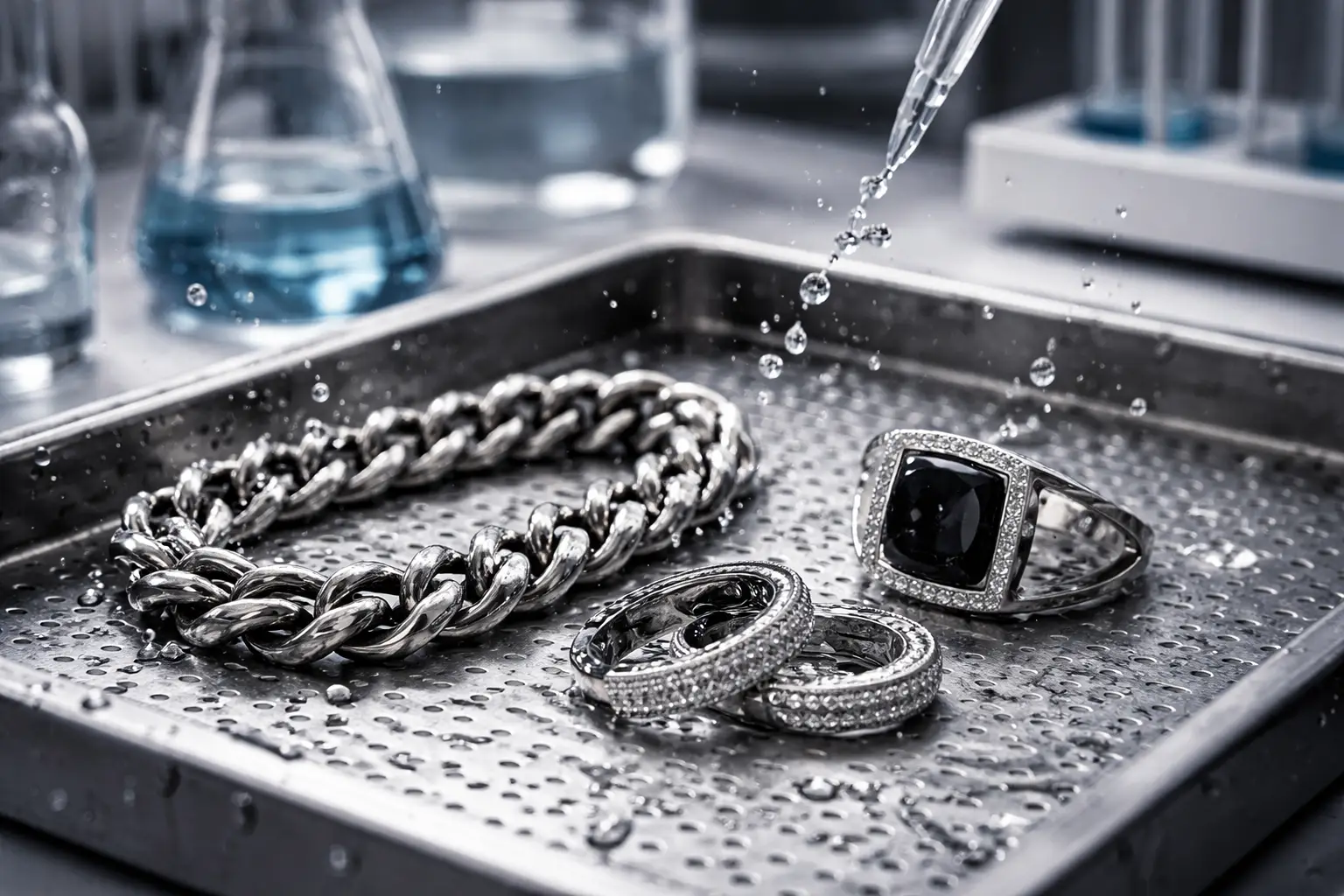
Stainless steel isn’t just iron; it contains a minimum of 10.5% Chromium. When chromium meets oxygen, it forms an invisible, microscopic shield called a Passivation Layer. This self-healing shield completely isolates the vulnerable iron inside from moisture and oxygen. Even if the surface of your jewelry gets slightly scratched, the chromium instantly reacts with the air to rebuild this protective barrier.
304 vs. 316L Marine Grade Steel
Not all steel is forged for the same environment. Understanding the grade is essential for making smart purchasing decisions.
| Steel Grade | Key Ingredient | Corrosion Resistance | Best For |
|---|---|---|---|
| 304 Stainless Steel | Standard Chromium-Nickel | High (Daily moisture) | Everyday wear, light sweating, daily showers. |
| 316L Stainless Steel | Adds 2-3% Molybdenum | Extreme (Salt & Acid resistant) | Marine environments, intense workouts, high-end brands. |
If you are a beachgoer or an athlete, look specifically for 316L “Marine Grade” steel—the added molybdenum acts as an extra fortress against corrosive elements.
The Ultimate Water Exposure Survival Matrix
Stop guessing where you can wear your pieces. Save this matrix to know exactly how your stainless steel will react in different environments.
Daily Showers & Tap Water
100% Safe. Mild soap and pure water will not harm the metal or its passivation layer.
Sweat & Intense Workouts
Highly Safe. 316L steel easily repels the mild salinity of human sweat.
Ocean & Saltwater
Caution. Safe to wear, but you must rinse it with fresh water afterward to prevent salt crystal buildup.
Chlorine Pools & Hot Springs
Avoid. Chlorine aggressively attacks the shield, while the high heat and acidity in hot springs will significantly accelerate the aging and degradation of PVD gold coatings.
The Golden Catch: 5 Myths About PVD Coating
Silver-toned (bare) stainless steel has no coating, meaning its color is permanent. However, most consumers prefer gold. This is where Vacuum PVD (Physical Vapor Deposition) comes in. Let’s debunk the top 5 myths about gold-plated steel.
Myth 1: “PVD is just a fancy word for regular plating.”
False. Traditional electroplating dips the metal into a chemical bath, creating a surface layer that flakes easily. Vacuum PVD bonds gold ions with the steel at a molecular level inside a vacuum chamber. This high-tech process achieves superior density and hardness, creating a finish that is far more durable and wear-resistant than standard water plating.
Myth 2: “Is gold plated jewelry waterproof forever?”
A frequent question we hear is, “is gold plated jewelry waterproof?” Yes, but not infinitely. While the underlying steel won’t rust, the gold PVD layer acts like high-tech ceramic paint. Constant exposure to hot shower water, harsh shampoos, and loofah friction will eventually thin the coating over 1.5 to 2 years.
Myth 3: “Is 14k gold waterproof if it’s used in PVD?”
Solid 14k gold is highly water-resistant. However, when consumers ask, “is 14k gold waterproof?” in the context of a PVD coating on steel, the answer depends on the coating’s micron measurement, not just the karat of the gold used. A professional-grade coating will survive water exposure much longer than a cheap flash-plating.
Myth 4: “Is brass jewelry waterproof if it has a PVD coating?”
When comparing cheaper alternatives, many buyers ask, “is brass jewelry waterproof?” Absolutely not. Even with a decent plating, brass is highly reactive. Once water finds a microscopic scratch in the plating, the brass underneath will oxidize rapidly, turning your skin green. Stainless steel prevents this entirely.
Myth 5: “PVD coated jewelry is completely scratch-proof.”
While PVD is incredibly hard, it is not immune to deep scratches from abrasive surfaces (like sand or gym equipment). If you deeply scratch the gold layer, the silver steel underneath will show through.
The Hidden Enemies: Chlorine, Salt, and Sweat
Swimming Pools and Chlorine Pitting
Chlorine doesn’t just bleach hair; it actively hunts for weaknesses in metal. It can bypass the chromium shield and cause Pitting Corrosion—microscopic holes in the surface of your jewelry that permanently ruin its smooth finish.
Ocean Water and Evaporation
Ocean water is manageable during the swim. The real danger happens when you dry off on the beach. As the water evaporates, it leaves behind highly concentrated sodium chloride (salt) crystals. These micro-crystals act as tiny corrosive batteries, accelerating wear on gold coatings.

Body Chemistry and Acidic Sweat
Athletes often ask, “is titanium jewelry waterproof?” because they have highly acidic sweat that destroys standard accessories. While titanium is excellent, 316L stainless steel is right behind it. Human sweat contains salt, uric acid, and lactic acid. Depending on your body’s pH balance, acidic sweat can slowly etch away at lower-quality platings over time. This makes post-workout rinsing absolutely mandatory.
From Consumer Frustration to Brand Disaster
Understanding how easily chlorine, salt, and acidic sweat can destroy standard jewelry reveals a harsh reality. For a consumer, a tarnished necklace is just a ruined vacation photo. But for jewelry brands, designers, and retailers, it means something far worse.
If you are running a jewelry brand, tarnished products lead directly to disastrous return rates, bad reviews, and a damaged brand reputation. A mere 10% increase in return rates due to tarnishing can completely swallow your net profit margins. If you want your customers to confidently wear your pieces to the beach or the pool this summer, you can’t just hope for the best. You need a manufacturing partner who engineers these “hidden enemies” out of the equation before the jewelry ever leaves the factory.
Sourcing Waterproof Jewelry: A Quick Guide for Brands & Retailers
To succeed in mature markets like Europe and the US—where consumers demand exquisite quality, environmental responsibility, and true waterproof performance—your supply chain must be flawless.
- Compliance & Audits (The European Key): Modern brands cannot rely on undocumented factories. Ensure your manufacturer holds SMETA, BSCI, and GRS (Global Recycled Standard) certifications, proving ethical labor and sustainable material usage.
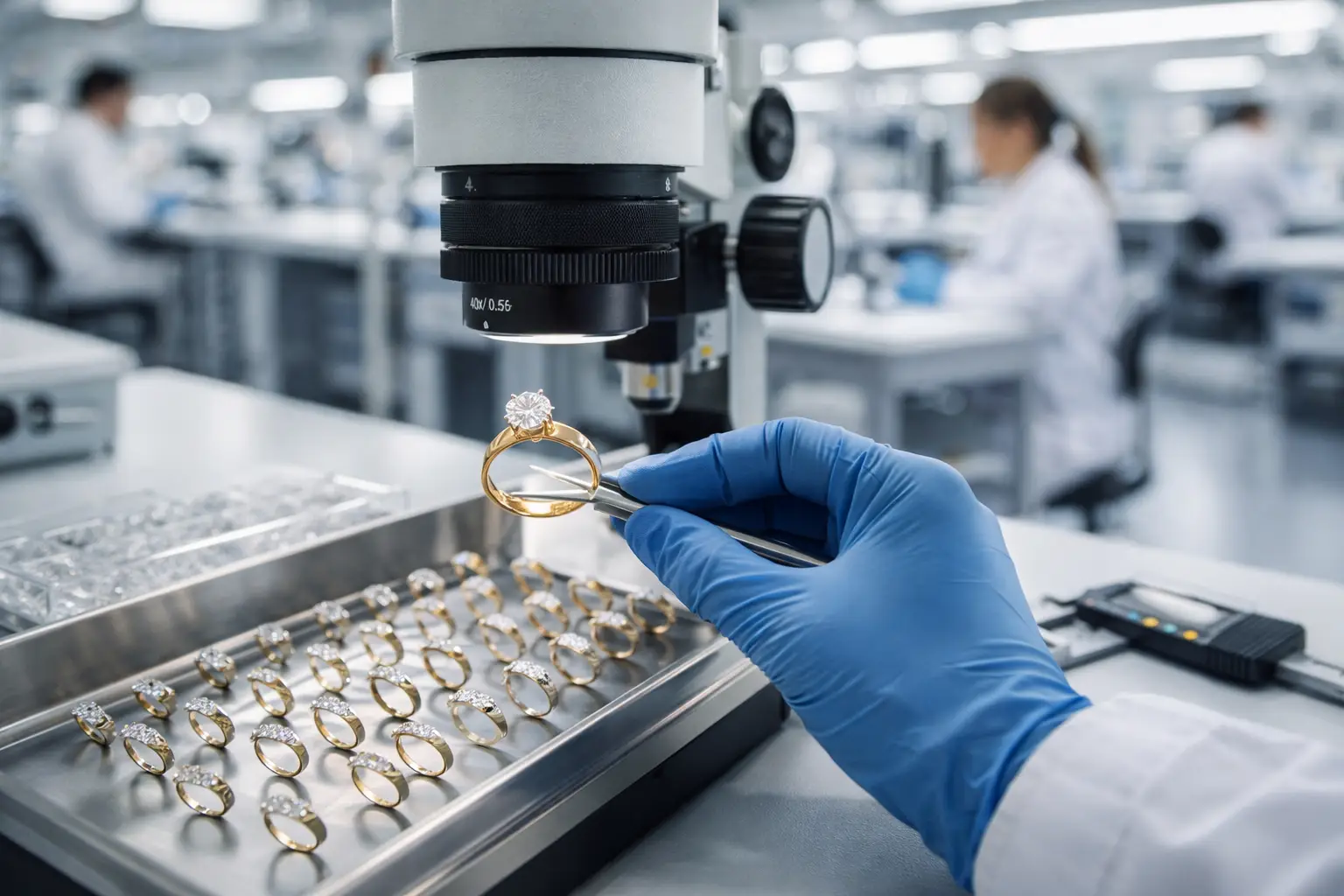
- Rigorous Testing Protocols: A promise isn’t enough. Your supplier must conduct in-house REACH, tension, tape adhesion, and salt spray tests to keep the defect rate strictly below 3%.
- Agile Scaling & IP Protection: You shouldn’t have to risk massive inventory to test a new waterproof line. Look for partners who guarantee your intellectual property by signing a strict NDA (Non-Disclosure Agreement) upfront, while offering 3D/CAD design support, fast 7-14 day sampling, and flexible MOQs of just 50-100 pieces.
Since 2003, Azone Jewelry has been the invisible force behind successful brands, mastering PVD technology and strictly adhering to global sustainability standards with a solid 1-2 year plating warranty.
Bonus: Free White-Label Care Card Template for Your Brand
Educating your customers is the best way to prevent misuse and reduce returns. For our B2B partners, Azone Jewelry provides this exact care routine as a complimentary, white-label care card template that you can print and include directly in your product packaging.
Jewelry Care Guide
Keep your waterproof pieces looking pristine.
- 1 Rinse Immediately: After swimming in the ocean or sweating heavily, rinse the jewelry under lukewarm tap water.
- 2 Pat, Don’t Rub: Use a soft microfiber cloth to gently pat the moisture away. Never use paper towels, as their wood fibers create micro-scratches on PVD gold layers.
- 3 Store Dry: Keep your jewelry in a fabric pouch in a dry room. Avoid storing it in a humid bathroom environment.


 English
  Spanish
  French
  German