.png.webp)
Introduction
Jewelry making is an art that borders engineering and aesthetic design, and is now available to the amateur and the businessman. Although the entry barrier has been reduced, the creation of quality adornments still needs a systematic knowledge of materials, tools, and construction techniques. This guide offers an in-depth analysis of the whole spectrum, including the basic manual assembly to the strategic planning that is required to grow into professional manufacturing.
Understanding the Three Main Types of Jewelry Making
The main types of jewelry production should be differentiated before buying tools or materials. They are not just various styles, but different disciplines that demand different sets of skills and capital investments. The table below summarizes the operational distinctions of the three primary paths to assist you in deciding which one fits your resources and objectives:
| Jewelry Type | Description | Key Techniques | Equipment & Investment |
| Assembled Jewelry | The entry point for most makers; involves connecting pre-existing components like beads, charms, and chains. | Manipulating connecting elements like jump rings, headpins, and functional findings. | Low Investment: Requires minimal machinery and basic pliers; allows for rapid production speeds. |
| Wire Wrapped Jewelry | A structural approach where thin wire serves as both a connector and a design element, creating bezels and structures without glue or heat. | Mechanical connections, coiling, and understanding metal gauge and hardness. | Medium Investment: Requires significant manual dexterity and specific pliers; relies on cold connections. |
| Fabricated & Cast Jewelry | The professional standard for fine jewelry; involves manipulating raw metals or creating molds to form custom shapes. | Sawing, soldering, polishing, lost wax casting, and complex stone setting. | High Investment: Requires specialized tools like torches and kilns; allows for impossible-to-assemble custom designs. |
Essential Tools and Supplies for Beginners
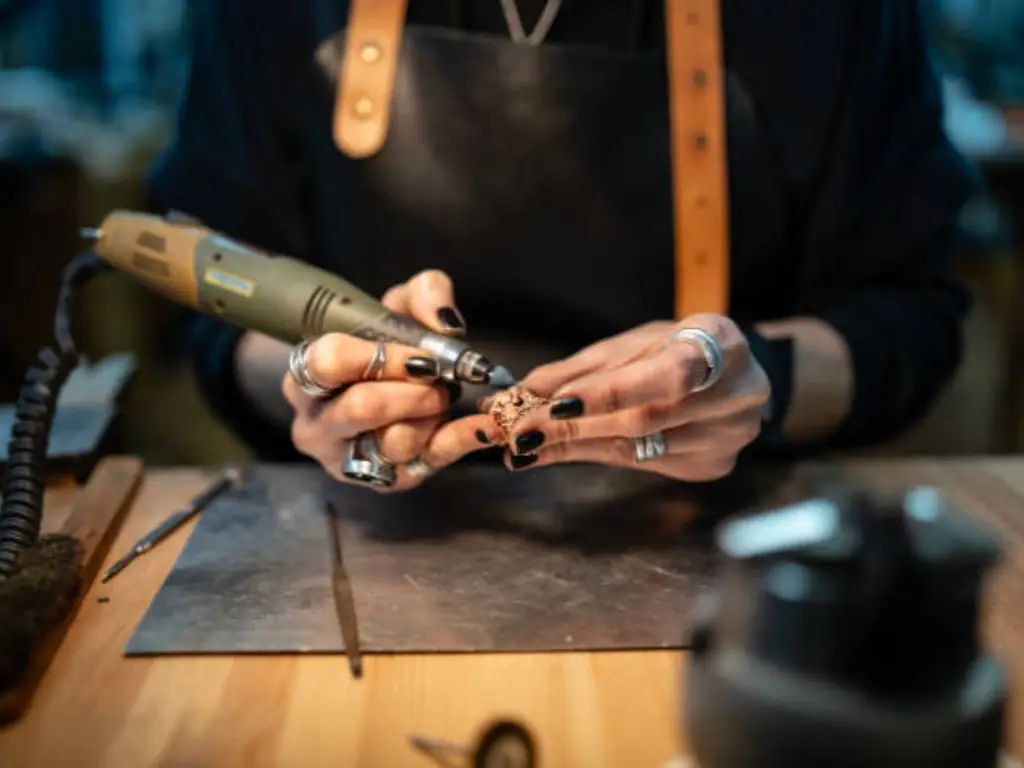
The quality of the final product is determined by the acquisition of the right tools. The most frequent mistake made by amateurs is to buy a generic jewelry kit at a general store, which often contains tools of inferior steel quality or pliers with serrated jaws that mar soft metals. Individual tools should be purchased through a special supplier such as Rio Grande or a well-known hardware store which carries precision tools. As you go on, be careful of the offers of a free set of pliers with large orders, as they are apt to be deformed.
The table below describes the exact type of pliers and cutting tools needed to start, and their particular uses:
| Tool Name | Primary Function & Technique | Best For (Craft Type) |
| Chain Nose Pliers | Features a flat inner surface and tapered point. Used for gripping small pieces, opening/closing jump rings, and bending wire at sharp angles. | Assembled & Wire Wrapped |
| Round Nose Pliers | Features conical jaws. Strictly used for creating loops, curves, and eye pins. Indispensable for manipulating thin wire. | Wire Wrapped |
| Flat Nose Pliers | Features broad, flat jaws. Provides a stable grip for holding metal sheets or wire to make sharp, angular bends. | Wire Wrapped & Fabrication |
| Flush Cutters | Engineered to cut wire leaving a flat, smooth end. Unlike side cutters (which leave a sharp “pinch”), these ensure comfort and safety in the final piece. | All Types |
| Bench Peg | A wooden block clamped to a table to support metal during filing and sawing operations. | Fabrication / Metalsmithing |
Tools used in cutting are also important. You will require good wire cutters. In particular, you need flush cutters. In contrast to side cutters in the toolbox of a carpenter, which leave a sharp pinch on the wire, flush cutters are designed to leave a flat smooth end on the wire. This difference is crucial to comfort and safety in the last work.
Other simple tools are a bench peg (a wooden block attached to a table with a clamp to hold the filing and sawing) a ruler, and a magnifying lamp. You will come across deals of a free set of pliers with large quantities of material; be careful, the steel used in these promotional tools is usually soft and can easily deform.
Core Techniques: Step-by-Step Instructions
Mastery of jewelry making is achieved through the repetition of fundamental mechanical actions. The following techniques form the basis of 80% assembled and wire-wrapped jewelry.
Basic Beading and Connection Techniques
Connection is the basic assembly unit. The initial thing in nearly any project is to know how to work with a jump ring. A jump ring should never be pulled in a horizontal direction, as this will bend its circular integrity. Rather, two pairs of pliers should be used to twist the ring laterally, insert the component and twist it back until the ends meet.
In strung items, the structural anchor is the crimp bead. Knots are not enough when flexible beading wire is used. The crimp bead is then threaded onto the wire and then the clasp. The wire is passed round the crimp bead. Using crimp pliers (or flat nose pliers in a basic setup), the bead is crushed to secure the wire. A properly compressed crimp bead ensures the longevity of the piece.
Introduction to Wire Wrapping Loops
A loop of wire has to be made to form a dangling component or a link in a chain. This is commonly performed with eye pins (straight wire with a pre-formed loop on one end) or headpins (wire with a flat stopper).
- Thread the bead onto the pin.
- Hold the wire above the bead with chain nose pliers and bend it 90 degrees.
- Cut the wire to a length of about one centimeter with flush cutters.
- Hold the end of the wire with round nose pliers and roll the wrist to roll the wire back to the bead creating a perfect circle.
In the case of wire wrapping in particular, a so-called wrapped loop is frequently used to provide additional security. This is done by extending the wire around the stem of the loop to form a coiled effect that does not allow the loop to open under tension. This is necessary in dealing with stainless steel or heavier stones.
The Lost Wax Casting Process Explained
Although it is hard to practice on a kitchen table, the knowledge of casting is essential to people who are interested in various forms of jewelry. It starts with a wax model, which is either hand-carved or 3D printed using resin. This model is surrounded by a plaster-like investment in a steel flask. The flask is then heated in a kiln, the wax melts and drips off (thus lost wax), leaving a negative cavity. This cavity is then filled with molten metal usually by centrifugal force or vacuum pressure. This process can be used to reproduce various shapes and complex details that cannot be reproduced through fabrication.
From Sketch to Reality: The Design Process
Good quality jewelry is produced even before the tools are lifted. It begins with design rigor. The process of making your own jewelry involves a translation of abstract ideas into specifications.
Designers are encouraged to keep a sketchbook to record dimensions, materials and technical difficulties. In case you want to use tiny pieces of costly gemstones, you need to measure it accurately to make sure that the setting will fit.
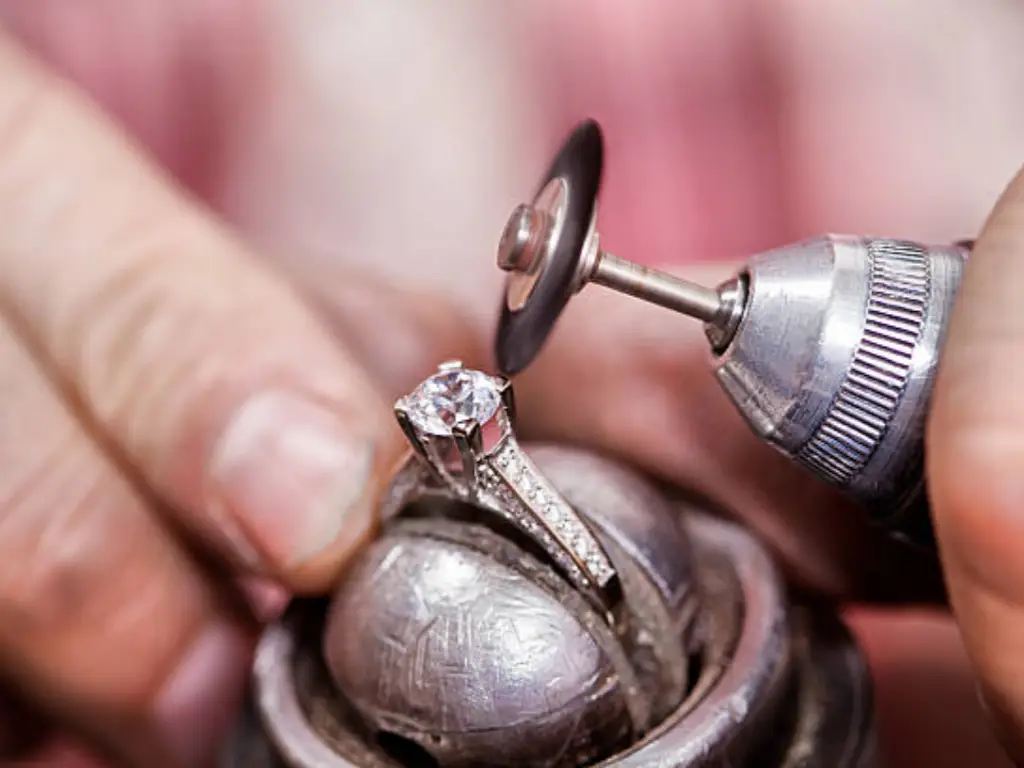
A stage of prototyping is required. A design can be tested with cheap copper or brass wire to enable the maker to troubleshoot the structure without wasting valuable metals. At this stage, it is decided in which sequence the operations should be performed, which solder joint should be soldered first, or which stone should be placed last. This planning eliminates the paint into a corner situation where a certain section of the work cannot be finished.
Challenges of Scaling: When Handmade Is Not Enough
To the hobbyist, it does not matter how much time it takes to create one piece. But to those who want to sell, labor is the main cost driver. The jewel makers often face a production ceiling.
The process of hand fabrication is slow in nature. It can take three hours of work to make a complicated wire-wrapped pendant. In order to sell this at a profit, the price point should be able to cover not only materials but also a professional hourly wage. This usually puts the product out of the competition of the average consumer market.
Moreover, it is hard to be consistent in manual production. When a retailer orders 100 pieces of jewelry, they want the same dimensions and finish. it is statistically unlikely and physically challenging to do this manually. Also, more sophisticated treatments of materials, like plating at the micron level or anti-tarnish finishes, are not commonly accessible in a home workshop.
Scaling Your Business with Professional Manufacturing
Once the demand of your designs is higher than you can handle by creating them by hand, or when you need technical specifications that are impossible to attain using simple tools, the logical next step is to engage a professional manufacturer. This shift enables the brand owner to concentrate on design and marketing and outsource the technical implementation to an industrial plant.
Why Partner with a Fashion Jewelry Manufacturer
In the case of brands in the fashion jewelry industry, Azone Jewelry offers a strategic manufacturing solution that will address the constraints of handmade production. In contrast to the general factories where orders must be placed in the thousands, Azone Jewelry accommodates the emerging brands with a flexible supply chain structure.
Low Minimum Order Quantity (MOQ): Inventory capital is one of the greatest entry barriers. Azone Jewelry can be ordered in as few as 50 pieces. This enables designers to experiment with various forms of designs in the market without incurring huge financial costs. It is a good method of making a first order of a new collection.
Strict Quality Control and Defect Rates: Quality variance in manual production is high. Azone Jewelry has a stringent quality control mechanism, which ensures a defect rate of less than 3%. This will make sure that all the products delivered to a customer are of the standard of the brand.
Regulatory Compliance and Testing: Retail businesses do not have the choice of complying with international safety standards. Azone Jewelry performs extensive tests to guarantee safety and longevity. This includes:
- REACH Testing: Confirmation that the products meet the EU regulations on chemical substances, namely testing of nickel release, lead, and chromium. This is essential in sales in European markets.
- SGS and GRS Certification: Assurance of materials that are sustainable and safe worldwide.
- Durability Testing: This involves Electroplating Thickness Measurement to test durability, Artificial Sweat Testing to test wear, and Salt Spray Testing to test corrosion resistance.
Through these industrial strengths, a brand is able to provide the best jewelry products that are safe, durable, and consistent, which is hard to assure with home-based production.
Quality Control and Finishing Touches
The last step is quality control whether the jewelry is created at a bench peg at home or in a factory. This is where the line between amateur and professional merchandise is drawn.
To the DIY maker, this would be to check all the working connections. Are the jump rings closed without any light passing through the gap? Are the ends of the wires folded in such that they do not catch on clothing? In case of stone setting, the stone should be fixed in the bezel.
In the case of the professional brand, QC has different metrics. It involves the tape test (plating adhesion), tensile strength test (chains do not break under normal stress) and visual inspection of surface scratches. Affiliate sites tend to focus on selling tools rather than educating people about these essential quality requirements. But, the only way to create a reputable brand is to know the quality parameters.
Conclusion
The history of jewelry making is a process of technical procurement, which has developed into the technical control of industrial supply chains, as opposed to the primitive manipulation of wire and beads. Regardless of whether the goal is personal mastery or commercial growth, the success is determined by the quality of inputs, whether it is the accuracy of the hand tools of the hobbyist or the standards of professional manufacturing of the business person. When you are moving on to twisting your first loop to approving production samples, keep in mind that scalability does not mean compromising quality. To the designers who are willing to step out of the workbench and start a retail-ready line, we would like to invite you to call Azone Jewelry today and see how our low-MOQ manufacturing can make your vision a reality with accuracy and speed- get your resources, complete your design and get to work.


 English
  Spanish
  French
  German