.png.webp)
How to Design Jewelry for Production: 7 Steps from Sketch to Tech Pack
Many independent designers fall into a costly trap: creating breathtaking sketches that are physically impossible to manufacture. In the B2B industry, jewelry design is a rigorous engineering process governed by metal tolerances, casting shrinkage, and gemological physics. Here is your definitive blueprint for scalable, defect-free production.
Step 1: Conceptualization and Defining Your Jewelry Aesthetic
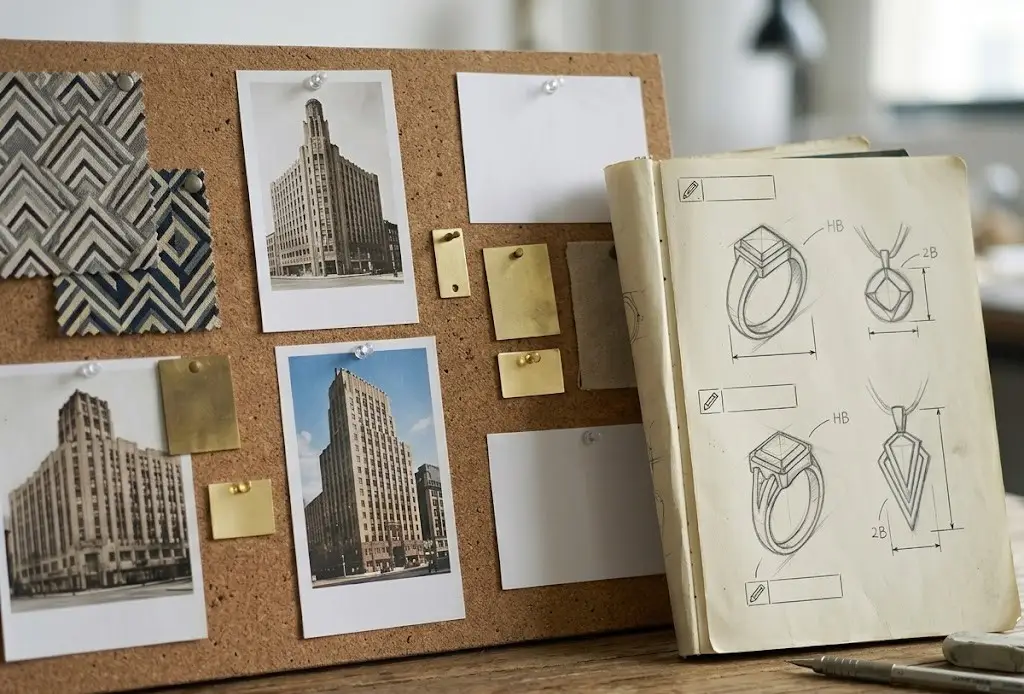
Before touching a pencil or opening CAD software, you must define the commercial intent of your design. Are you creating a single avant-garde showpiece, or a scalable commercial line?
The most successful jewelry brands don’t rely on random flashes of inspiration; they build a Capsule Collection. By extracting core visual elements from a mood board, you can create 3 to 5 cohesive pieces. This unified design language not only strengthens brand identity but also lowers manufacturing costs by allowing you to share molds and standardize gemstone sizes across the collection.
Step 2: Understanding Jewelry Materials and Gemstones
Designing without understanding material physics is a recipe for catastrophic production failures. Your chosen materials will dictate the structural integrity of your final piece.
Precious Metals and Casting Behaviors
A delicate, ultra-thin ring shank might look elegant on paper, but if cast in 24K pure gold, it will warp within days. Commercial production requires a balance of beauty, cost, and durability.
| Metall Typ | Hardness & Durability | Ideal Commercial Use Case | Manufacturing Nuance |
|---|---|---|---|
| 18K Gold | Moderate (75% pure gold) | High-end, luxury bridal | Rich color saturation, but prone to scratching if designs are too thin. |
| 14K Gold | High (58.3% pure gold) | Everyday fine jewelry | The industry sweet spot. Best balance of tensile strength and cost. |
| 925 Sterling Silber | Moderate (requires rhodium) | Accessible luxury, fashion | Highly prone to oxidation; must specify anti-tarnish plating in your tech pack. |
| 316L-Edelstahl | Extrem hoch | Minimalist, men’s, everyday | Naturally highly resistant to oxidation and corrosion. PVD vacuum plating is only applied when custom colors are required. |
Gemstones and Setting Mechanisms: The Heat Test
Not all stones can survive the pressure of the jeweler’s bench or the heat of the kiln. In modern mass production, factories often use a “Cast-in-place” (wax setting) technique to lower labor costs. This means the gemstone is placed directly into the wax mold before the molten metal is poured (often exceeding 1,000°C).
While Diamonds and Sapphires have high heat resistance and can survive this process, stones like Topaz or Pearls will shatter or melt instantly. If you design a piece with heat-sensitive stones, you must specify traditional hand-setting post-casting.
Step 3: From Rough Sketches to Technical Drawings
A beautiful perspective sketch is art, but a factory cannot manufacture art. To cross the threshold from designer to producer, you must learn to generate Orthographic Projections.
Your technical drawings must display the piece from three distinct angles: Top, Front, and Side. A front-view sketch tells the manufacturer nothing about the thickness of the shank or the depth of the setting. It must include precise millimeter (mm) dimensions.
Step 4: 3D CAD Modeling and DFM (Design for Manufacturability)
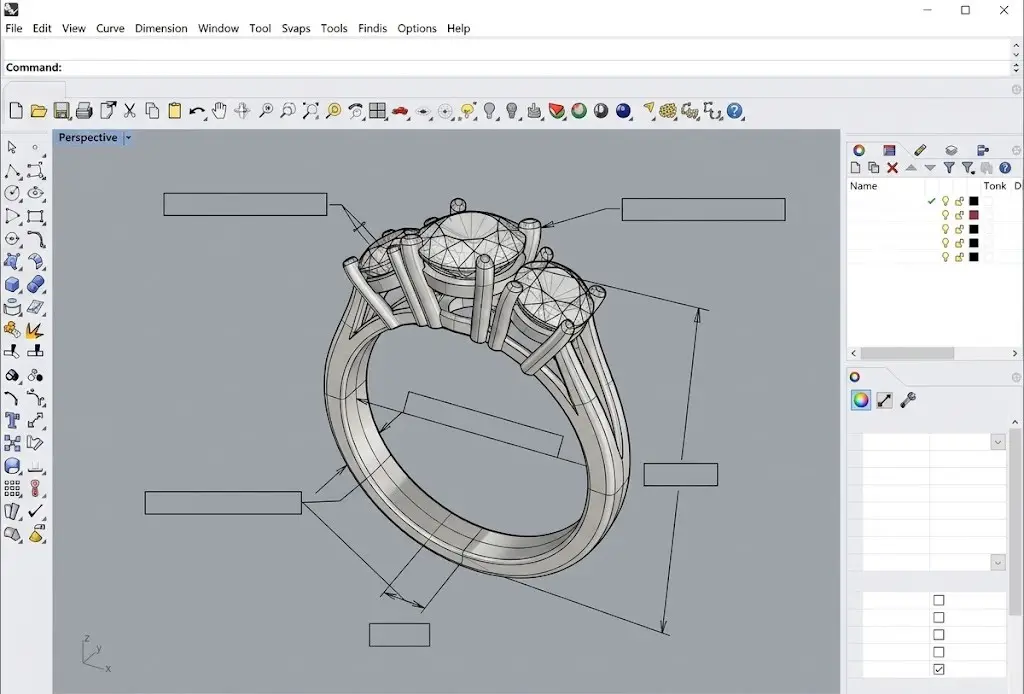
This is the deepest water of the jewelry production lifecycle. High-precision manufacturing requires NURBS surface modeling capable of 0.01mm tolerances.
The Financial Sting of Ignoring DFM
The Reality Check: Liquid metal experiences a shrinkage rate of 1.5% to 2% as it cools.
If you design a ring prong at 0.6mm in CAD, after printing, casting, and polishing, it will be paper-thin. A single failed prototype due to poor DFM can cost you $150 to $300 in wasted molds and metal, and delay your launch by 3 to 4 weeks. Multiply that across a collection, and the financial impact is severe.
This is why established brands rely on source manufacturers with dedicated CAD engineering teams. At Azone Jewelry, our engineers conduct a rigorous DFM analysis on every file before a single mold is cut, maintaining a strict defect rate of under 3%.
Step 5: Creating a Flawless Jewelry Tech Pack
A Tech Pack is the legal and technical contract between you and your factory. Sending loose sketches is a guaranteed path to costly prototyping failures.
- Visuals: Multi-angle CAD screenshots (Top, Front, Side, Perspective).
- Dimensions & Tolerances: Exact mm measurements, plus acceptable deviation limits (e.g., +/- 0.1mm for ring width).
- Materials & Weight: Specify the alloy and the Estimated Metal Weight.
- Mechanical Details: Explicit instructions for moving parts (e.g., lobster clasps, jump ring soldering, hidden hinges).
- Stone & Finish: Exact gem specs and surface treatments.
Step 6: Prototyping and Vetting the Right Manufacturer
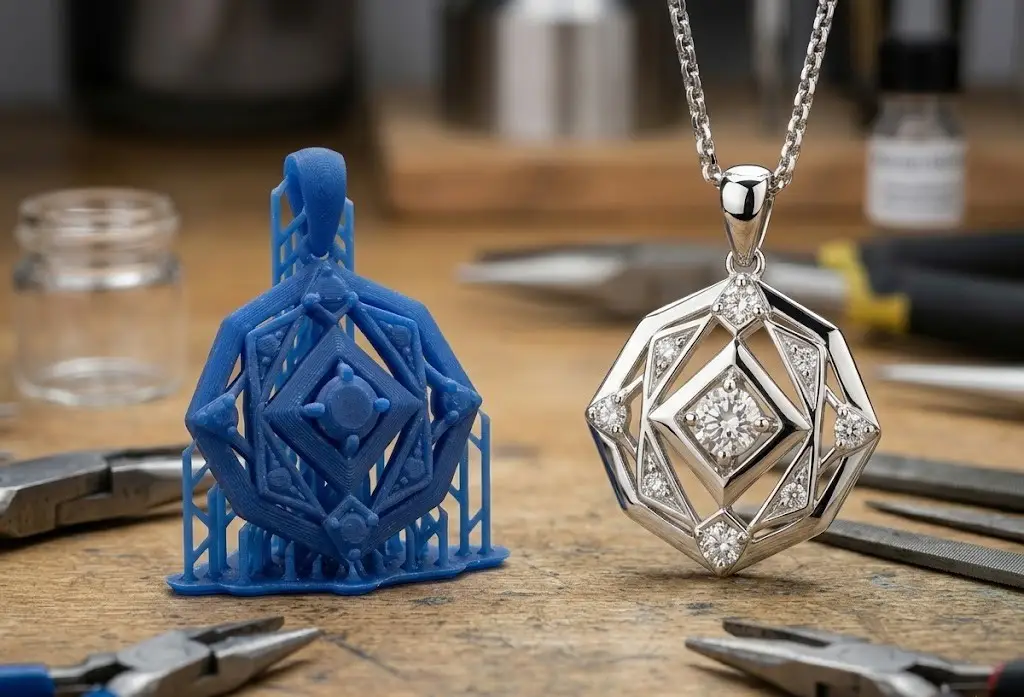
The transition from digital data to physical reality begins with prototyping. However, you must test different prototypes for different mechanical realities.
A 3D resin or wax print is strictly for verifying visual proportions and dimensional accuracy. It cannot be worn. To test physical weight, balance, and “snagging” (ensuring prongs don’t catch on clothing), you must request a metal master model (typically brass or silver).
3 Non-Negotiable Criteria for Your Supply Chain
- Absolute IP Protection: The factory must operate under strict NDAs to protect your proprietary files from being copied.
- Agile Supply Chain: Look for partners who support agile prototyping and flexible batch orders (50-100 pieces MOQ).
- ESG & Compliance Certifications: Demand proof of REACH testing, as well as BSCI, SMETA, and GRS certifications to pass strict EU/US customs.
Step 7: Mass Production and Quality Control (QC)
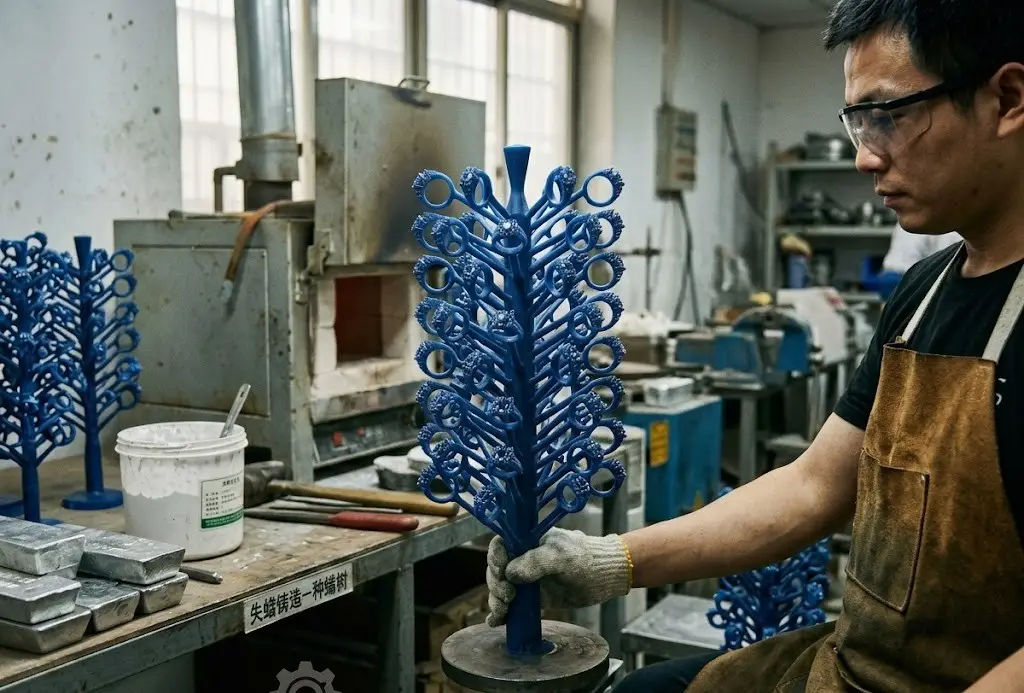
Once the prototype is approved, the design officially enters mass production.
The factory will create a master silicone mold, from which hundreds of wax replicas are injected and attached to a central sprue to form a “casting tree.” A reliable B2B manufacturer will implement strict AQL standards, involving artificial sweat tests, tape tests for plating adhesion, and salt spray tests. Your design is only successful if the 1,000th piece matches the perfection of the 1st piece.
Ready to Bring Your Design to Scale?
With over two decades of experience serving premium brands across Europe and the Americas, Azone-Schmuck is built on the principles of compliance, precision, and agility. Here is how we bridge the gap for scaling designers:
- Rigorous CAD & DFM Auditing: Proactive structural engineering to ensure your defect rate stays below 3%.
- Low-Risk Scaling: Minimum Order Quantities (MOQs) starting at just 50 to 100 pieces.
- Certified Quality: Fully backed by global SMETA, BSCI, and REACH certifications, plus 1-2 year plating warranties.
Häufig gestellte Fragen (FAQ)
For Beginners & Independent Creators
Yes. Many successful brand founders start with mood boards and collage images. As long as you can communicate your vision and exact dimensions to a professional CAD engineer, rough concepts can be translated into technical blueprints.
For individuals looking to create a personal piece (like an engagement ring), the process is similar but you bypass mass production. You provide a sketch to a custom jeweler, who creates a CAD model for your approval before casting it once.
For Startup Brands & B2B Buyers
For startup brands, 14K Gold and 925 Sterling Silver offer the best balance of perceived value and profit margin. For high-volume fashion segments, 316L Stainless Steel with PVD plating provides excellent durability at a lower cost.
Prototyping costs typically range from $150 to $300 for a precise 3D CAD file and a physical master model, depending on material and complexity. Choosing a manufacturing partner focused on long-term scaling ensures you get high-fidelity prototypes that perfectly match mass production quality.
The next step is utilizing platforms like Shopify. Ensure you request high-quality 3D renders or macro photography from your manufacturer to populate your digital storefront before the physical inventory even arrives.


 English
  Spanish
  French
  German