.png.webp)
Costume Jewelry Market: The $40B Blueprint for B2B Brands
The costume jewelry market has evolved far beyond cheap alloy trinkets. As the industry surges past a $40 billion valuation, D2C brands and wholesale distributors are cashing in on a massive shift toward “fine jewelry dupes.” Success in today’s highly lucrative U.S. costume jewelry market requires abandoning outdated mass-production models in favor of mastering material science, agile manufacturing, and strict chemical compliance. Let’s decode the blueprint.
The Trajectory of the Global Costume Fashion Jewelry Market
Understanding the macro-environment through a precise costume jewelry market analysis is the first step to securing your margins. The growth isn’t just driven by volume, but by a distinct shift toward higher average order values (AOV) as consumers demand premium alternatives to fast fashion.
Macro Data: Valuation and Segment Shifts
- Current Valuation: Valued at over $40 Billion, the industry is projected to maintain a robust CAGR of 6.5% – 8.1% through 2034.
- Market Share Epicenter: The expansion is heavily concentrated in the “demi-fine” segment, bridging the gap between fast fashion and fine jewelry.
- Market Reality: This multi-billion dollar expansion equates to an increasing annual per capita spend on accessories, replacing rare investments with high-frequency fashion staples.
Core Drivers Fueling the Expansion
Three primary engines are driving this unprecedented growth:
- The OOTD Culture: Driven by social media, the visual consumption model has slashed product life cycles from seasonal to weekly.
- The ‘Dupe’ Economy: Gen Z and Millennials actively seek high-quality alternatives to luxury pieces, prioritizing design over intrinsic precious metal value.
- Macroeconomic Pressures: As inflation impacts discretionary income, consumers substitute expensive solid gold with thick-plated, premium pieces.
Demographics, Aesthetics, and Product Mapping
Sourcing blindly is a guaranteed path to dead stock. B2B buyers must map their procurement strategy directly to specific consumer psychographics, aligning the right product categories and manufacturing techniques with the exact audience buying them.
| Target Audience | Primary Motivation | Acceptable Price Point | Preferred Materials |
|---|---|---|---|
| Gen Z (16-25) | Trend adherence, maximalist expression, rapid rotation | $10 – $35 | Zinc Alloy, Acrylic, Stainless Steel, Resin |
| Young Professionals (26-35) | “Quiet luxury” dupes, office-to-evening versatility | $40 – $120 | Brass (Thick Gold Plated), 925 Silver, Cultured Pearls |
| Mature Buyers (36-50+) | Statement pieces, hypoallergenic needs, longevity | $80 – $250+ | 316L Stainless Steel, Brass with E-coating, Semi-precious stones |
Gen Z & Millennials: Maximalism and the Weight Problem
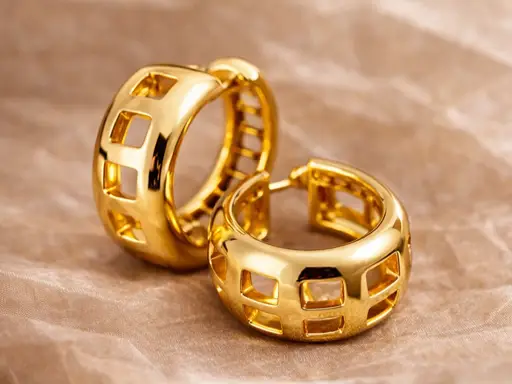
Driven by social media, younger demographics are pushing the maximalism trend—chunky, heavy-metal designs like oversized dome earrings and thick Cuban chains. However, solid heavy pieces lead to exorbitant air-freight costs and high return rates due to earlobe fatigue. Smart B2B buyers solve this using Hollow Electroforming or lightweight resin cores. These advanced manufacturing techniques allow brands to offer massive visual volume with minimal physical weight and reduced metal costs.
Young Professionals (26-35): Quiet Luxury and Thick-Plated Eco-Brass
Bridging the gap between fast fashion and lifelong investments, young professionals are fueling the “Quiet Luxury” movement. This demographic outright rejects the hollow, lightweight feel of zinc alloy but balks at the retail price of solid 18K gold. They demand office-to-evening versatility with a premium, substantial weight. To capture this lucrative segment, brands must source high-density Eco-Brass finished with 0.5 to 1 micron of real gold electroplating. This specific material matrix mimics the exact weight, warmth, and longevity of fine jewelry, satisfying their desire for premium dupes that will not tarnish during daily wear.
Mature Buyers: Vintage-Inspired Replications & Eco-Compliance
For the 35+ demographic, there is a massive appetite for retro aesthetics and statement pieces. Instead of dealing with the unpredictable quality and toxic metals often found in antique items, premium brands are focusing on Vintage-Inspired Replications. By utilizing modern, eco-friendly casting processes—such as combining recycled eco-brass with thick, nickel-free gold electroplating—factories can perfectly recreate complex 80s vintage textures while easily passing stringent modern REACH and Prop 65 compliance tests.
The Universal Staples: Necklaces and Earrings
Across all demographics, necklaces and earrings form the bedrock of the market due to zero sizing friction. Unlike rings, which require stocking multiple sizes (creating an immense dead stock risk), a universally sized pendant or standard hoop ensures maximum inventory fluidity and effortless cross-selling through trends like “Necklace Layering.”
Material Segmentation and Supply Chain Realities
This is the battlefield where profit margins are either secured or lost. The difference between a thriving D2C brand and one drowning in returns lies entirely in material selection and surface treatments.
Base Metals Breakdown: Zinc Alloy vs. Brass vs. Stainless Steel
| Material Type | Raw Material Cost | Weight & Feel | Allergy Rate | Brand Positioning |
|---|---|---|---|---|
| Zinc Alloy | Very Low | Lightweight, feels hollow | High (if not plated properly) | Fast Fashion, mass market (< $20) |
| Eco-Brass | Medium | Substantial, mimics solid gold | Low (with nickel-free plating) | Premium D2C, Designer Brands ($40-$150) |
| 316L Stainless Steel | Low-Medium | Solid, rigid, industrial feel | Extremely Low (Hypoallergenic) | Everyday wear, waterproof jewelry |
The Truth About Plating Technologies and Profit Margins
First, a strategic imperative: for premium D2C brands, Zinc Alloy must be completely eradicated from your supply chain due to its notorious heavy metal compliance risks and abysmal plating adhesion. Tarnishing is the ultimate brand-killer, but overpaying for the wrong plating destroys margins. You must align your plating technology with your retail pricing tier. For the $20-$40 everyday waterproof segment, PVD (Physical Vapor Deposition) over 316L Stainless Steel is the gold standard—highly durable and cost-effective.
However, if you are targeting the premium $50-$150 D2C tier using Eco-Brass, PVD isn’t viable. You need Micron-level Real Gold Electroplating (e.g., 0.5 to 1 micron of 14K/18K gold). This costs significantly more but provides the luxurious weight and authentic color that high-end buyers demand. To prevent fading and justify your markup, this micron plating must be sealed with an E-coating (electrophoretic lacquer).
Decoding the Global Trade Landscape: Demand vs. Supply
The Demand Side: High-AOV Markets and Strict Compliance
North America and Europe represent the highest AOV (Average Order Value) zones globally. Consumers here willingly pay $80 for a well-branded brass necklace. While other regions may focus on volume, the EU and US remain the absolute profit centers. However, the barrier to entry isn’t marketing—it’s navigating their ruthless compliance laws.
The Supply Side: Manufacturing Powerhouses and Agile Sourcing
The global supply chain is highly specialized. While some regions excel in handcrafted stones and others handle ultra-cheap alloys, premium D2C brands require high-grade 316L stainless steel and flawless brass casting. For this, Dongguan and Guangzhou in China represent the undisputed gold standard of premium, compliant jewelry manufacturing.
Navigating Compliance and Environmental Regulations
Ignoring chemical regulations is the fastest way to bankrupt a jewelry brand. Customs agencies in the EU and US are aggressively intercepting shipments that fail safety audits.
- EU REACH Regulation (Strict Differentiation): For general skin-contact items, nickel release must be < 0.5 μg/cm²/week. However, for post assemblies (earring posts inserted into pierced ears), the limit is strictly < 0.2 μg/cm²/week. Failing to specify this distinction to your factory guarantees customs rejection.
- California Proposition 65: Not a simple “zero tolerance” ban, but rather strict ppm (parts per million) limits for lead and cadmium. Exceeding these thresholds requires mandatory warning labels on the packaging—a death knell for consumer trust in premium jewelry. Precise compliance testing is non-negotiable.
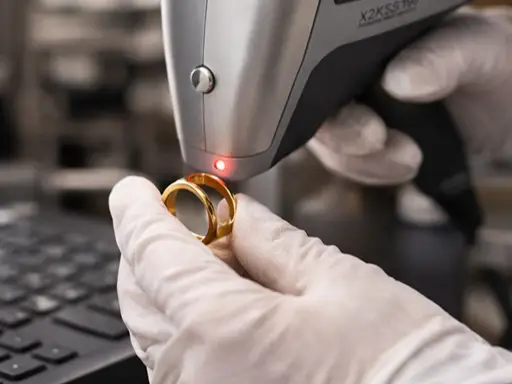
Leading suppliers prove their worth through documented testing. Partnering with a factory that holds SMETA labor audits and GRS (Global Recycled Standard) certifications is vital. Before shipment, elite manufacturers subject their products to rigorous 48-to-72-hour NSS (Neutral Salt Spray) Tests and precise XRF Plating Thickness Measurements to keep the defect rate under 3%—a standard Azone Jewelry enforces rigorously to protect our global B2B clients.
Strategic Sourcing: The Total Cost of Ownership (TCO)
Selecting the Right Manufacturing Partner
When auditing a factory, ask the hard questions: Is your plating facility in-house or outsourced? Can you provide recent SGS testing reports? A factory that quotes slightly higher but guarantees “nickel-free (< 0.2 μg/cm² for ear posts)” in the contract is a far safer asset than a cheap vendor who ghosts you when customs flags your shipment.
Mitigating Dead Stock: The TCO Math of Agile Procurement
The traditional model of ordering massive quantities for a lower unit price is a trap. Let’s look at the Total Cost of Ownership (TCO) for premium thick-gold plated brass jewelry: Imagine ordering 2,000 units of a trendy piece to secure a $4.50 unit price ($9,000 total capital tied up). If the trend fades and you only sell 300 units, your actual cost for the sold units skyrockets to $30.00 each, plus the warehousing fees for 1,700 pieces of dead stock.
To execute agile procurement, you need a partner like Azone Jewelry, strategically located in the core premium manufacturing belt of Dongguan. We empower brands with a highly accessible MOQ of just 50-100 pieces. Unlike small workshops where “low MOQ” usually means unregulated outsourced risk, Azone operates with absolute compliance: utilizing our own controlled plating lines, providing SGS inspection reports, and guaranteeing full REACH compliance. Yes, an agile MOQ for premium production might cost $7.50 per unit upfront, but your total cash risk is isolated to just $375. It’s not about finding the “cheapest” unit price; it’s about absolute risk isolation, 7 to 14-day rapid sampling, and protecting your cash flow without compromising quality.
Stop risking your capital on dead stock and non-compliant suppliers.
Download our exclusive “Costume Jewelry Material & Cost Matrix” and “First-Order Pitfall Guide” to master your sourcing strategy.
Get the Free B2B Blueprint Now


 English
  Spanish
  French
  German