.png.webp)
Introduction
Purchasing a chain necklace requires more than simply selecting a visually appealing design. The physical structure of the chain dictates its performance, its longevity, and its comfort. Choosing the incorrect chain structure can result in continuous physical discomfort, as certain designs routinely catch and pull fine hairs on the back of the neck. More importantly, selecting a structurally weak chain to hold a heavy pendant frequently leads to mechanical failure, resulting in the permanent loss of expensive jewelry.
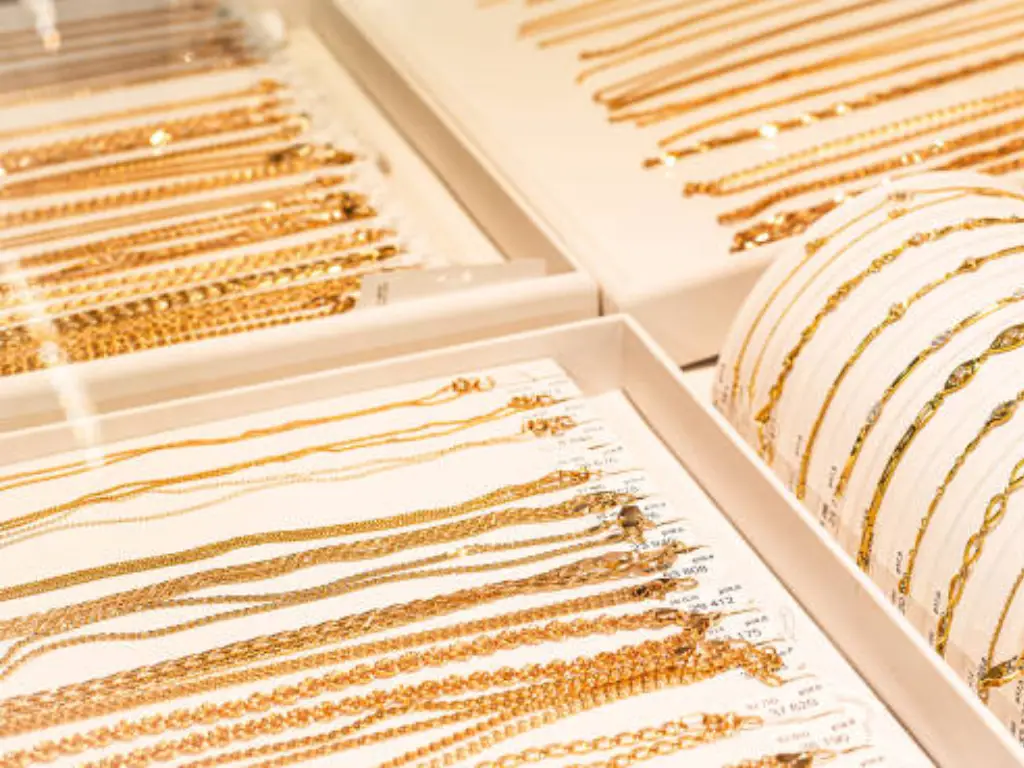
As a primary jewelry manufacturing facility operating since 2003, Azone Jewelry has overseen the production, testing, and quality control of millions of chains. Our engineers and craftsmen witness firsthand exactly how different chain structures perform under stress. Today, we are bypassing standard retail sales scripts to provide you with a factual, engineering-based analysis of necklace chains. We will detail exactly which structural designs offer the highest tensile strength, which designs are suitable for daily wear, and which specific chain types you must never wear while sleeping.
The Ultimate Chain Selection Cheat Sheet
For buyers requiring immediate data, the following table quantifies the primary characteristics of the most common chain structures. Use the links provided in the first column to navigate directly to the comprehensive structural analysis of each chain type.
| Chain Type (Click for Details) | Durability Rating | Hair Pull / Tangle Risk | Best Structural Use Case |
| Rope Chain | ⭐⭐⭐⭐⭐ | Very Low | Supporting heavy pendants |
| Cuban/Curb Chain | ⭐⭐⭐⭐⭐ | Low | Independent daily wear |
| Box Chain | ⭐⭐⭐⭐ | Zero | Everyday wear with light pendants |
| Cable Chain | ⭐⭐⭐ | Low | Minimalist independent wear |
| Figaro Chain | ⭐⭐⭐⭐ | Low | Independent wear |
| Wheat Chain | ⭐⭐⭐⭐⭐ | Low | Supporting heavy pendants |
| Mariner Chain | ⭐⭐⭐⭐⭐ | Low | High-tension environments |
| Paperclip Chain | ⭐⭐⭐ | Low | Layered styling |
| Snake Chain | ⭐⭐ | ⚠️ Very High | Occasional wear only; never bend |
| Herringbone Chain | ⭐ | ⚠️ High | Formal wear only; never bend |
Top Most Popular Types of Chain Necklaces
The following section breaks down the exact physical characteristics of the top ten chain types in the market. We evaluate them based on their manufacturing design, physical advantages, structural flaws, and optimal usage.
Rope Chain: The Undisputed King of Durability
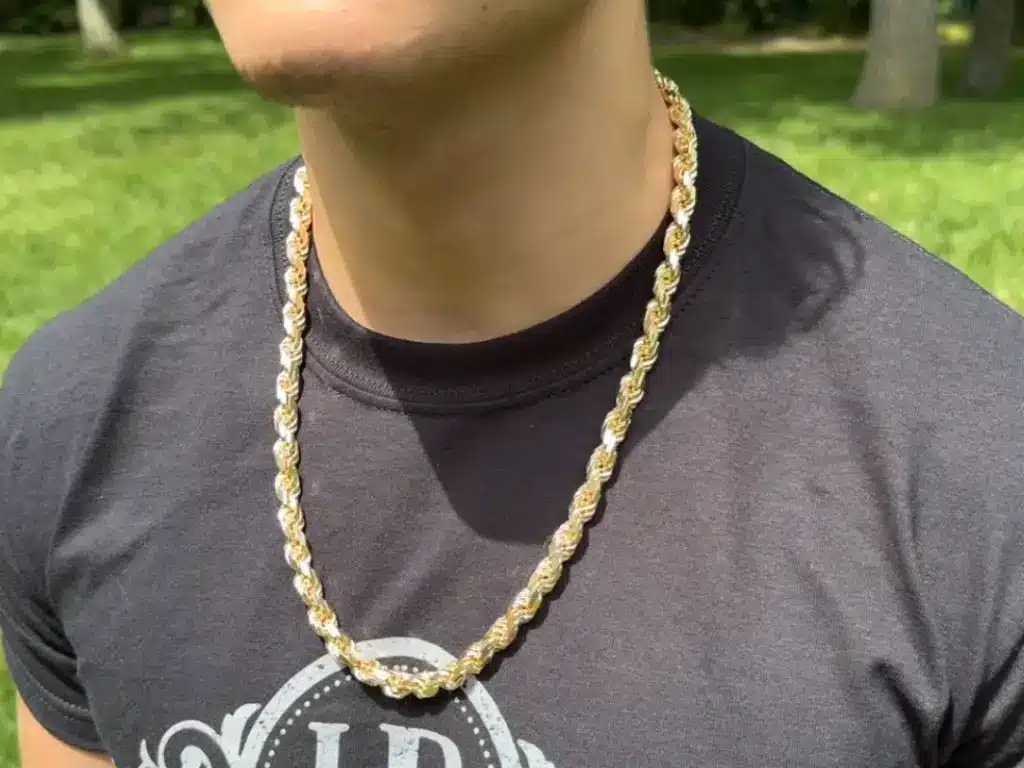
- The Verdict: The Rope chain offers the highest tensile strength of any standard jewelry chain.
- The Physical Design: This chain consists of numerous small metal links tightly woven together to form a twisted, cylindrical pattern. Because multiple links intersect at any given point, the weight is distributed across several metal segments simultaneously.
- The Good & The Bad: The primary advantage is extreme structural integrity. If a single metal segment breaks, the surrounding woven links hold the chain together, giving you time to notice the damage and take it to a jeweler for repair. The primary disadvantage is that the tight, twisted gaps between the links accumulate dirt, skin cells, and oils quickly. It requires frequent cleaning in an ultrasonic bath.
- Styling & Maintenance Tip: Select a solid Rope chain between 2mm and 3mm in width when you need to secure a heavy gold or diamond pendant.
Cuban Link Chain: The High-Density Flat Structure
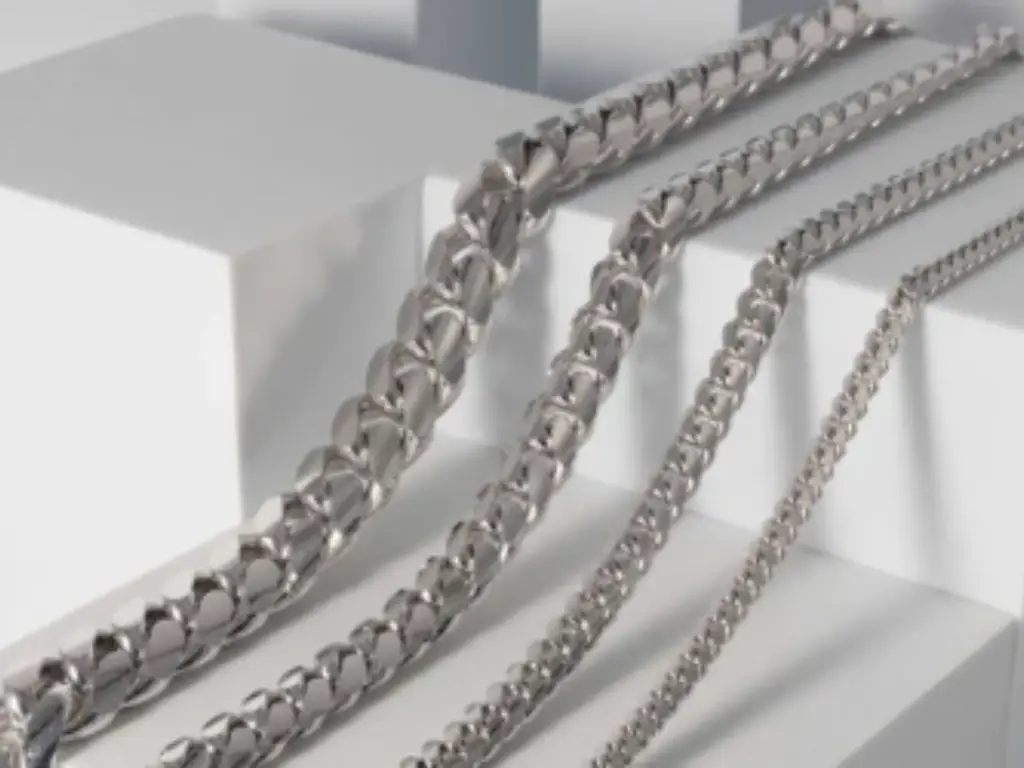
- The Verdict: The Cuban link chain provides a dense, flat, and highly durable surface that resists all forms of twisting and mechanical deformation.
- The Physical Design: This chain is engineered by interlocking round or oval links, twisting them mechanically, and polishing the surface until it lays completely flat against the skin. The defining structural characteristic of the Cuban link is its high density; the links are placed exceptionally close together, minimizing any visible gaps and creating a nearly continuous band of metal.
- The Good & The Bad: The flat, tightly packed design distributes weight perfectly and prevents the chain from rolling during physical movement. This extreme density makes it exceptionally strong and highly resistant to breaking under tension. The primary disadvantage is weight; because of the lack of negative space between links, variations wider than 8mm become extremely heavy and require significant material costs.
- Styling & Maintenance Tip: This chain performs optimally when worn independently as a statement piece, without a pendant. Men frequently select solid Cuban links in widths of 5mm or greater for daily, continuous wear.
Curb Chain: The Open-Spaced Flat Profile
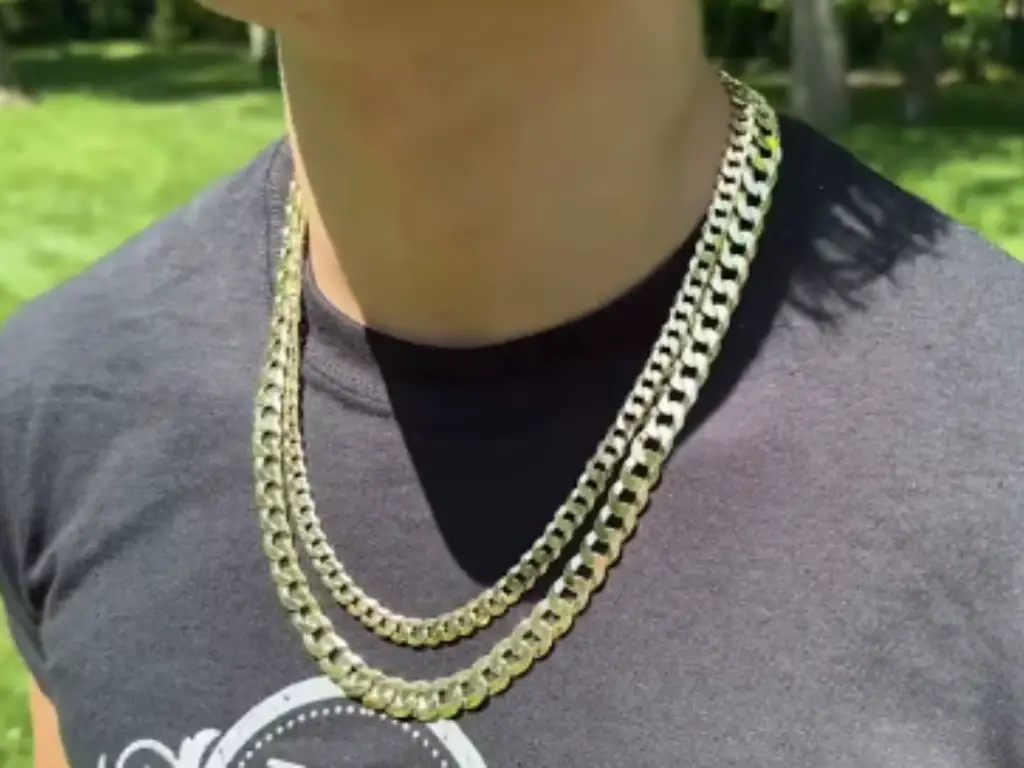
- The Verdict: The Curb chain offers the flat, twisting-resistant benefits of the Cuban link but utilizes a lighter, more open structural profile.
- The Physical Design: Similar to the Cuban link, the Curb chain utilizes interlocking round or oval metal links that are mechanically twisted and flattened to sit flush against the collarbone. However, the Curb chain is manufactured with specifically wider, looser spacing between the individual metal links, creating distinct visible gaps within the structure of the chain.
- The Good & The Bad: The wider spacing reduces the overall amount of metal required per inch. This makes the Curb chain significantly lighter and more cost-effective than a Cuban link of the exact same width, while still retaining the flat profile that prevents the chain from rolling. The downside is that the looser spacing provides slightly less sheer tensile strength than the tightly packed Cuban design, though it remains exceptionally durable for standard daily use.
- Styling & Maintenance Tip: The lighter physical weight of the Curb chain makes it highly suitable for supporting medium-to-heavy pendants, provided the 1:1 weight ratio rule is strictly followed. It is also an excellent standalone piece for buyers seeking a flat profile without the extreme weight of a Cuban link.
Box Chain (Venetian Chain): Sleek, Modern, and Tangle-Free
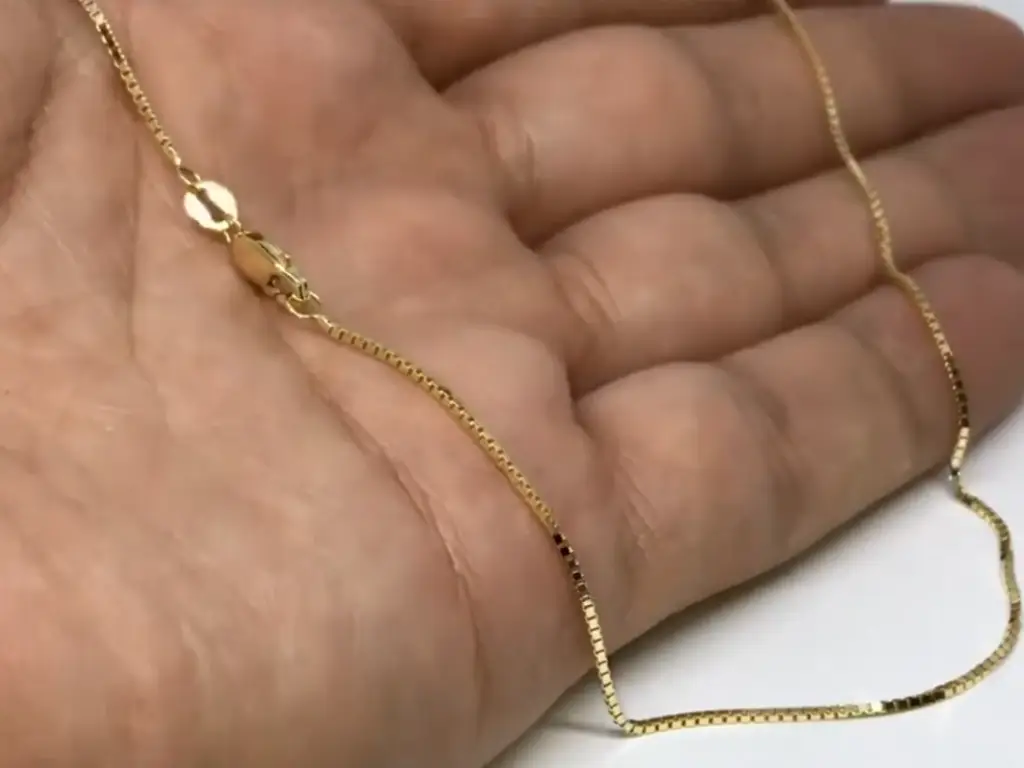
- The Verdict: The Box chain provides a continuous, smooth surface that will not catch hair.
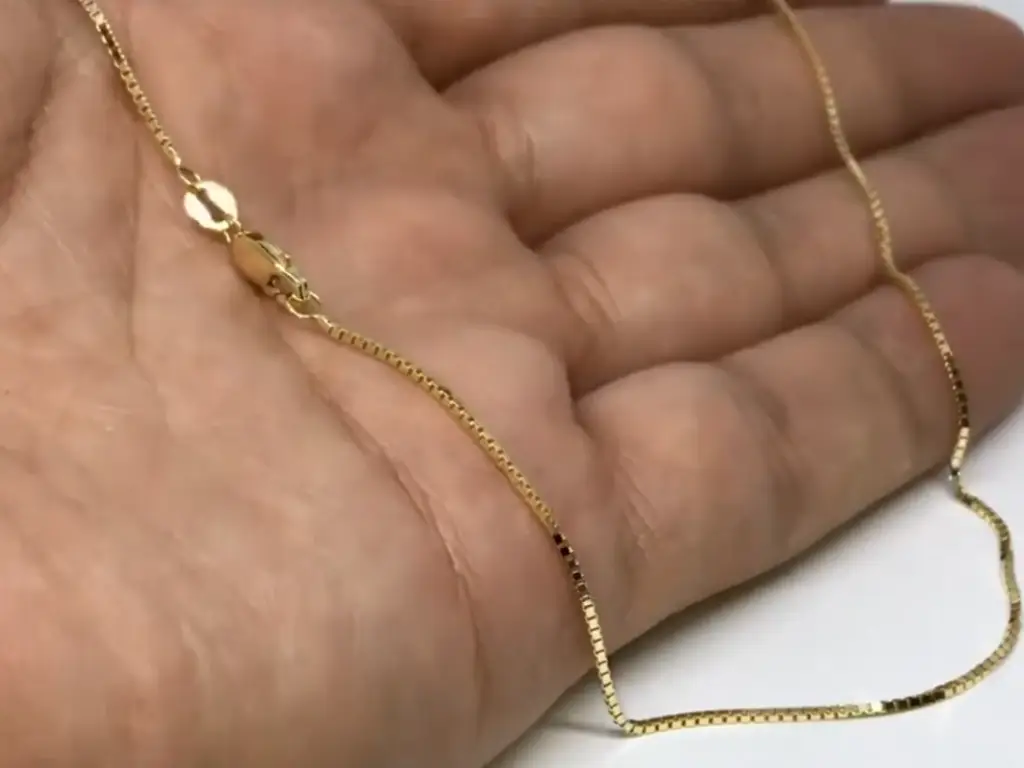
- The Physical Design: Instead of round wire, this chain is constructed using square wire formed into short, box-like interlocking links. This creates a continuous, four-sided geometric profile.
- The Good & The Bad: The most significant advantage of the Box chain is its completely smooth exterior. Because there are no protruding wire ends or wide gaps, it is physically impossible for this chain to catch or pull fine hairs on the neck. It is also highly resistant to tangling in a jewelry box. If a Box chain breaks, it is more difficult for a jeweler to solder seamlessly compared to round links.
- Styling & Maintenance Tip: This is the optimal chain for women wearing lightweight diamond or geometric pendants on a daily basis.
Cable Chain: The Timeless Everyday Essential
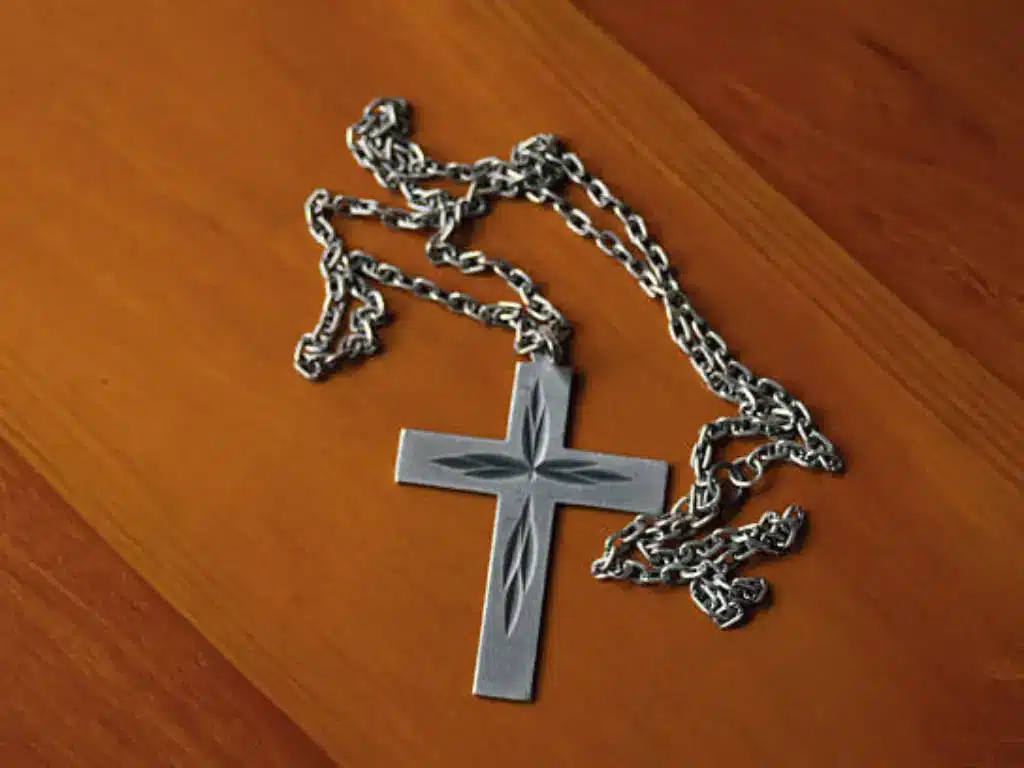
- The Verdict: The Cable chain is the most basic, traditional chain structure available.
- The Physical Design: It consists of identical round or oval links connected directly to one another in a simple alternating pattern.
- The Good & The Bad: Its simplicity is its main advantage. If a link breaks, any competent jeweler can solder it back together within minutes, leaving no visible trace. However, the structural disadvantage is that all tension is placed on single connection points. If you purchase a Cable chain thinner than 1mm, a slight pull from a baby or catching it on a sweater will snap the wire.
- Styling & Maintenance Tip: Keep Cable chains above 1.5mm in thickness if you intend to wear them daily with a pendant.
Figaro Chain: The Italian Classic
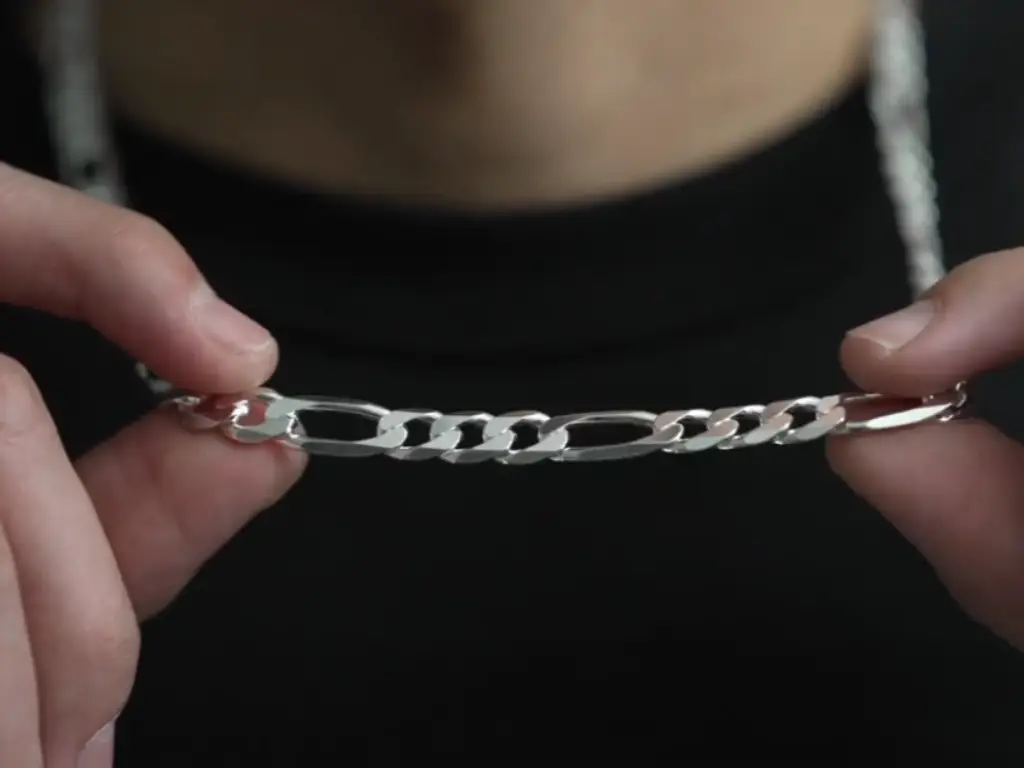
- The Verdict: The Figaro chain is defined by its specific alternating link pattern, originating in Italy.
- The Physical Design: The structure follows a strict mathematical pattern: three short, circular links followed by one elongated oval link. This pattern repeats for the entire length of the chain. It is flattened in the same manner as a Curb chain.
- The Good & The Bad: The varied link sizes create visual interest, making it an excellent standalone piece. However, because of the elongated links, adding a heavy pendant often causes the chain to sit off-center, as the pendant’s bail may get caught in the long oval sections rather than sliding smoothly.
- Styling & Maintenance Tip: Wear the Figaro chain independently. Do not attach heavy pendants to it.
Wheat Chain: The Woven Marvel of Strength
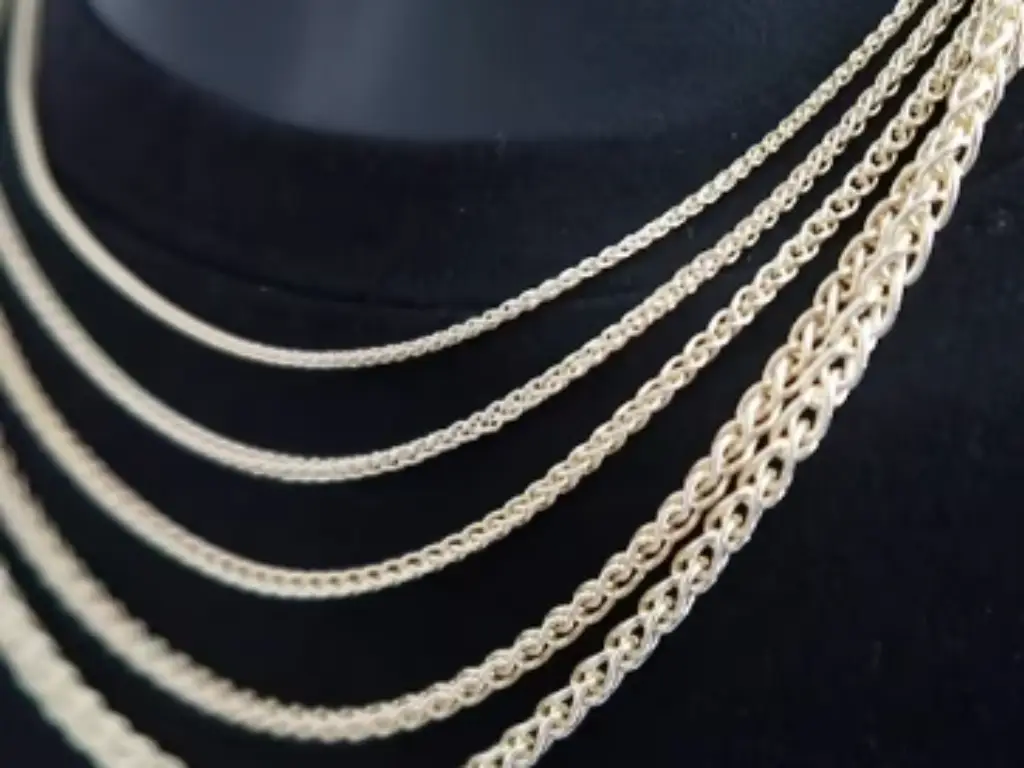
- The Verdict: The Wheat chain provides high tensile strength and significant structural rigidity.
- The Physical Design: It is manufactured using four distinct strands of oval and twisted metal links woven together in a single direction. This creates a highly dense, semi-rigid cylindrical cord of metal.
- The Good & The Bad: The multi-strand weaving provides a high degree of resistance against stretching or deformation under heavy loads. It is almost as strong as the Rope chain. The disadvantage is its lack of flexibility; it does not drape as softly over the collarbone as a Cable or Box chain.
- Styling & Maintenance Tip: Utilize the Wheat chain as a highly secure alternative for heavy, valuable pendants when you want a more complex visual texture than a standard Rope chain.
Mariner / Anchor Chain: The Industrial Survivor
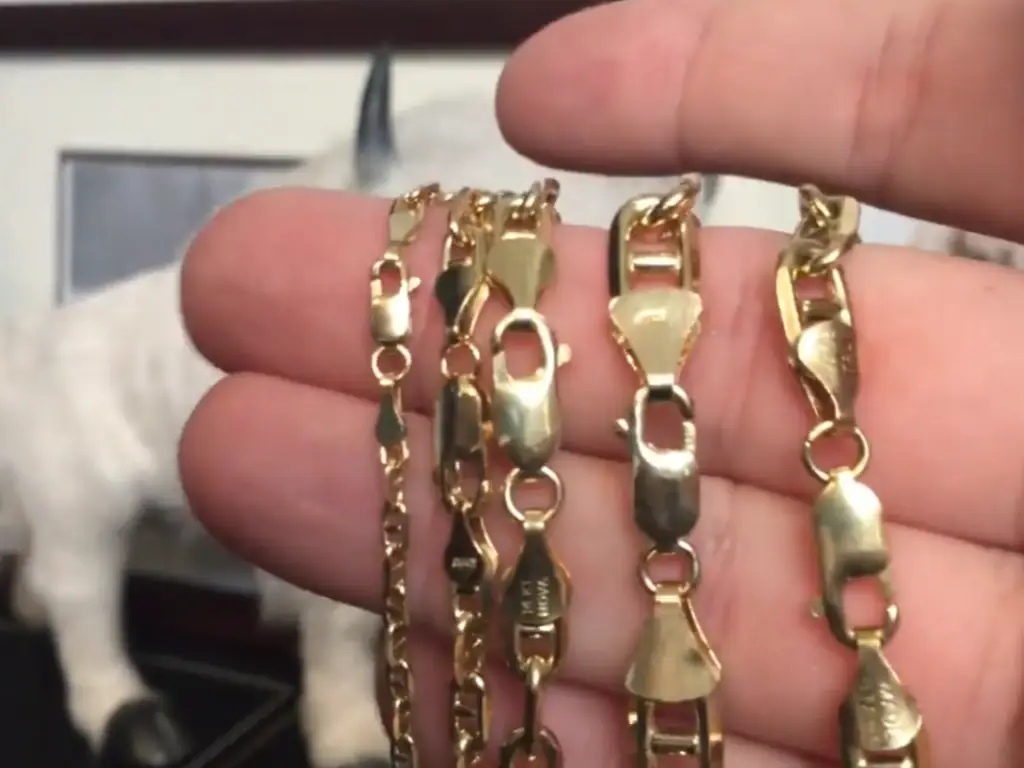
- The Verdict: The Mariner chain is engineered specifically to prevent the links from compressing under extreme tension.
- The Physical Design: Each oval link features a solid metal bar intersecting the center. This design is directly replicated from nautical anchor chains.
- The Good & The Bad: The center bar serves a vital mechanical function: if the chain is pulled with excessive force, the bar prevents the oval link from being squeezed together and deformed. This makes it structurally superior for high-tension environments. Visually, it projects a strictly industrial aesthetic, which may not pair well with delicate jewelry designs.
- Styling & Maintenance Tip: Available in flat or puffed (rounded) variations, it serves as an excellent, highly durable standalone piece for men.
Paperclip Chain: The Modern Trendsetter
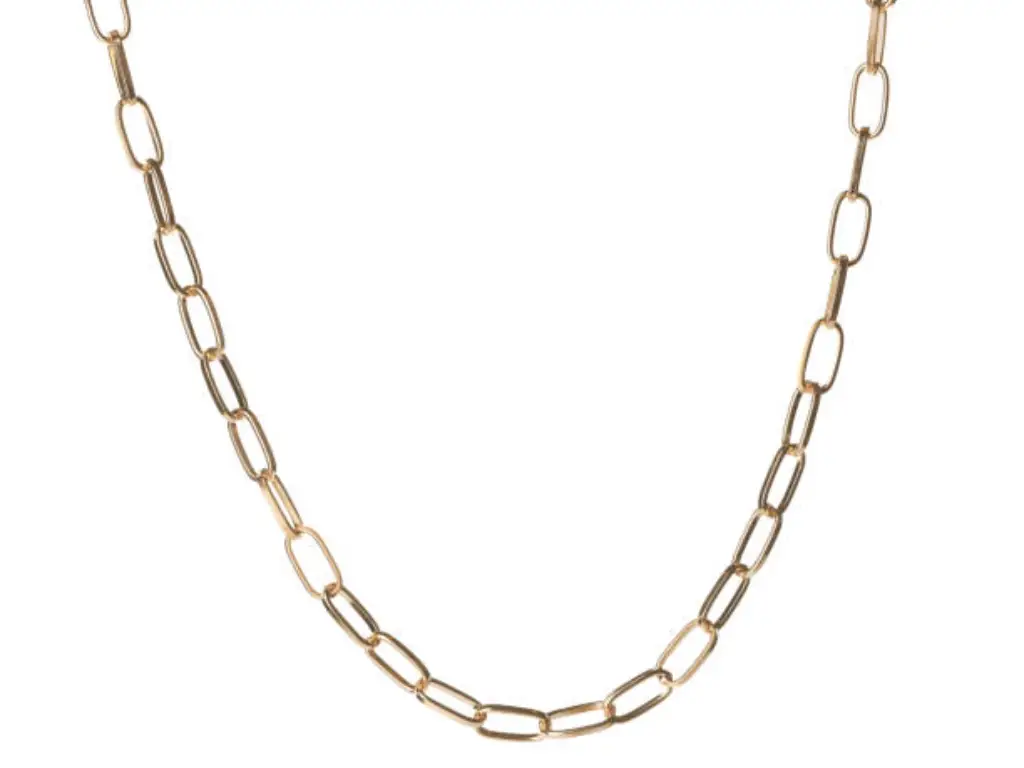
- The Verdict: The Paperclip chain offers a high-volume visual appearance with low actual weight.
- The Physical Design: It consists of severely elongated, rectangular links made from relatively thin wire. The links contain significant empty space in the center.
- The Good & The Bad: The primary advantage is weight efficiency. You receive a chain that looks substantial but weighs very little, keeping manufacturing and purchasing costs down. The critical disadvantage is that the long, flat sides of the rectangular links are prone to bending or denting if subjected to direct pressure, particularly in hollow variations.
- Styling & Maintenance Tip: This chain is best used for layered styling at different lengths. Remove it before participating in sports or heavy physical activity.
Snake Chain: Seamless and Beautiful, but Prone to Kinks
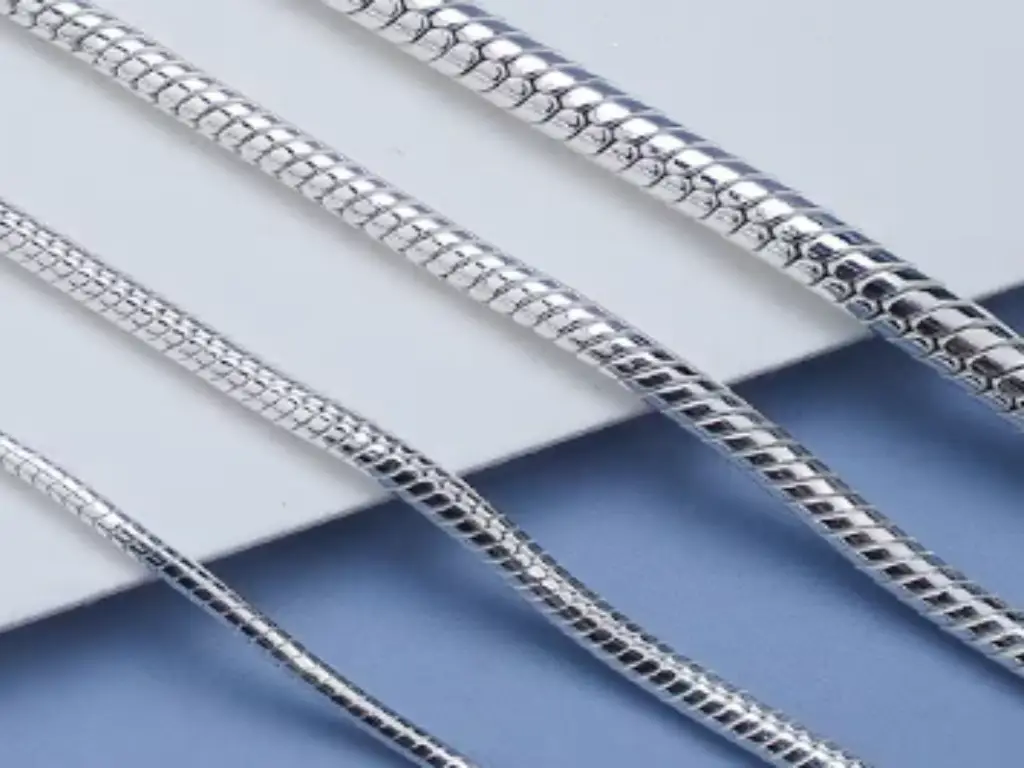
- The Verdict: The Snake chain offers a continuous metal surface but presents severe mechanical limitations.
- The Physical Design: This chain does not use traditional interlocking rings. Instead, it is constructed from tightly joined, slightly curved metal plates assembled to form a continuous, highly flexible metal tube.
- The Good & The Bad: The tight construction creates a highly polished surface that reflects light evenly. However, you must be aware of two severe flaws: First, the microscopic gaps between the curved plates routinely catch and pull fine hairs. Second, the tubular structure cannot tolerate sharp bends. If the chain is folded, it creates a permanent structural kink that no jeweler can repair.
- Styling & Maintenance Tip: Never wear a Snake chain while sleeping. Store it strictly by hanging it straight down or laying it perfectly flat in a wide circle.
Herringbone Chain: High Maintenance Flat Design
- The Verdict: The Herringbone chain requires strict handling protocols to prevent permanent damage.
- The Physical Design: It is manufactured using short, parallel metal segments arranged in a slanted pattern, forming a completely flat, wide ribbon of metal.
- The Good & The Bad: It lies perfectly flush against the skin, offering a highly formal appearance. However, it is the most fragile chain type on the market. The flat ribbon design possesses zero lateral flexibility. Any twisting, bending, or compression will instantly snap the metal segments or create a permanent crease.
- Styling & Maintenance Tip: Reserve this chain exclusively for formal events. You must remove it immediately upon returning home and store it perfectly flat on a rigid surface.
The Jeweler’s Secret: How to Match Your Chain with a Pendant
The most common reason for a chain breaking is not a manufacturing defect, but user error in matching the chain to a pendant. You must follow strict physical rules.
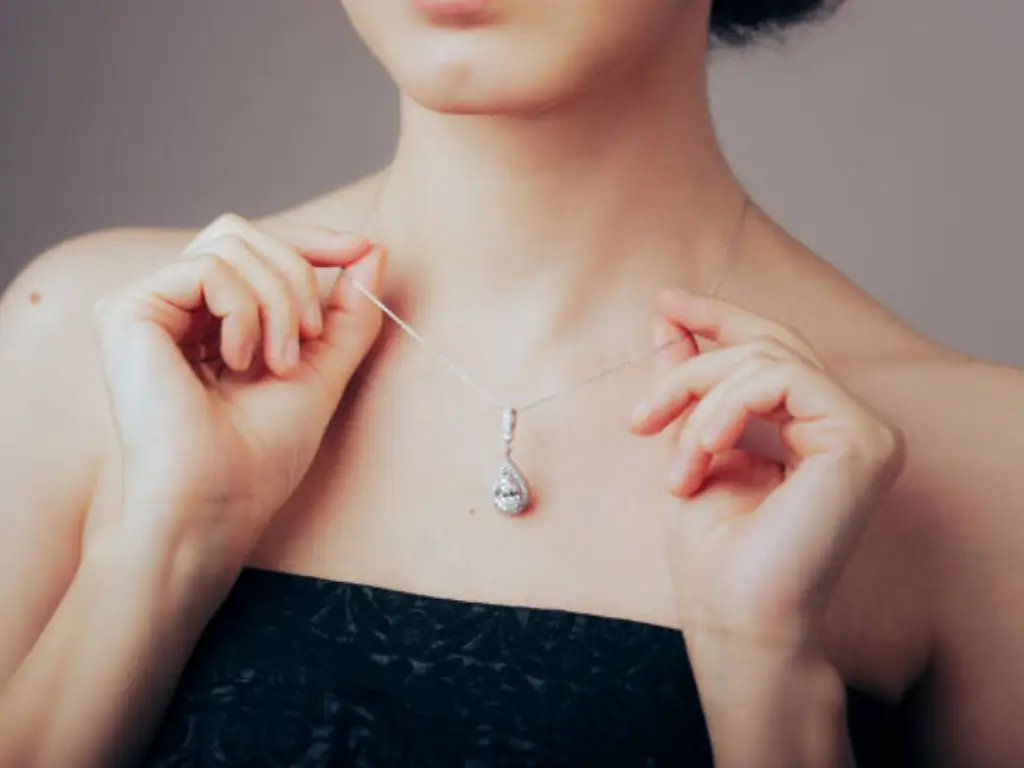
The 1:1 Weight Ratio Rule: The physical weight of the chain must be equal to, or greater than, the physical weight of the pendant. If you place a 10-gram solid gold pendant on a 2-gram Cable chain, physics dictates the outcome. The heavy metal loop on the pendant (the bail) will act like a saw against the thin wire of the chain, creating friction through daily movement until it cuts completely through the metal.
The Bail Fit Test:
Before purchasing a chain thicker than 3mm, you must physically measure the interior diameter of the bail attached to your pendant. The chain must pass through the bail with at least 1mm of clearance to allow the pendant to swing freely and prevent rigid friction points.
Behind the Scenes: How We Test Chain Durability (The Azone Standard)
At Azone Jewelry, durability is not estimated; it is mechanically verified. Before any chain leaves our 1500-square-meter facility, it undergoes a rigorous testing protocol to ensure it meets international compliance standards (including SMETA, BSCI, and ROHS).
Our quality control process includes a mechanical Pull Test to verify tensile strength and a Wear Resistance Test to ensure the structural integrity of the links over time. Furthermore, to combat the common issue of metal discoloration, we utilize precise Electroplating Thickness Measurements, combined with Artificial Sweat Tests and Salt Spray Tests. We provide a standard 1-to-2-year electroplating warranty. By adhering to these strict manufacturing metrics, our factory maintains a defect rate strictly below 3%.
Solid vs. Hollow Chains: The Hidden Truth About Price and Lifespan
Buyers often purchase hollow chains to acquire a larger visual piece of jewelry at a lower price point. You must understand the physical reality of this choice.
Hollow chains are manufactured with empty space inside the metal links. While this reduces the weight and the cost, it leaves a very thin wall of metal exposed to the environment. If you hit a hollow chain against a hard surface, the metal wall will dent inward. Once a hollow link is dented, it cannot be pushed back out. If a hollow link breaks, the thin metal walls often melt when a jeweler attempts to apply the heat necessary for soldering. For long-term durability and the ability to repair the item, you must invest in solid metal chains.
Finding Your Perfect Fit: Chain Length & Thickness Guide
Selecting the correct dimensions is necessary for both aesthetics and physical comfort.
- Length Placements:
- 16 Inches: Rests tightly at the base of the neck.
- 18 Inches: The standard length. Rests exactly on the collarbone. Optimal for lightweight pendants.
- 20 Inches: Rests slightly below the collarbone. The standard starting length for men’s chains.
- 24 Inches: Rests at the center of the chest. Required for wearing large pendants over clothing.
- Thickness Guidelines:
- 1mm – 2mm: Standard width for securing small pendants.
- 3mm – 5mm: The appropriate width for a chain worn entirely on its own for daily use.
- 8mm and above: Heavy, high-visibility chains intended strictly for independent wear.
Frequently Asked Questions (Expert Answers)
What is the strongest chain necklace for daily wear?
Solid Rope chains, Wheat chains, and Cuban links offer the highest tensile strength and resistance to breakage for daily wear.
Which chain types do not catch or pull hair?
Box chains and tightly linked Curb chains have smooth exterior profiles and do not possess the necessary gaps to catch or pull fine hairs.
Can I sleep with my chain necklace on?
You can sleep wearing a solid Cable or Rope chain. You must absolutely remove Snake chains and Herringbone chains before sleeping, as the pressure will cause permanent structural damage.
Final Thoughts & Partner With Us: Ready to Create Your Own Jewelry Line?
Selecting the correct chain requires an understanding of metal structures, weight distribution, and usage environments. Whether you require the high tensile strength of a Rope chain or the specific styling of a Paperclip chain, prioritizing solid construction and correct sizing will prevent jewelry loss and physical discomfort.
If you are a jewelry brand founder, independent retailer, or designer seeking to integrate high-quality custom chains and jewelry into your product line, Azone Jewelry provides the stainless steel jewelry manufacturing infrastructure you need to scale.
- Flexible Order Volumes: We support emerging brands with a Low Minimum Order Quantity (MOQ) of 50 to 100 pieces per design.
- Rapid Production Cycles: Our engineering team delivers initial samples within 7 to 14 days, with full production runs completed and ready for DHL delivery in 15 to 30 days.
- Verified Compliance: We utilize GRS-certified recycled materials and FSC-compliant packaging, ensuring your brand meets the strict environmental standards required by today’s consumers.
Transform your technical designs into physical inventory. Click here to contact our engineering team today to receive technical support within 12 hours and secure your custom manufacturing quote.


 English
  Spanish
  French
  German