.png.webp)
Introducción
When examining a piece of jewelry in a retail display or catalog, you must accurately determine if it is an authentic historical item or a modern reproduction. For individual buyers, understanding these historical categories prevents costly purchasing errors. For jewelry brand managers, this knowledge is mandatory to design collections that meet current consumer demand. This guide delivers a direct, factual breakdown of vintage jewelry styles, equipping both consumers and designers with a visual timeline, an objective authentication checklist, and a clear path for collecting or manufacturing high-quality, vintage-inspired collections in 2026.
Antique vs. Vintage vs. Retro vs. Reproduction: What’s the Difference?
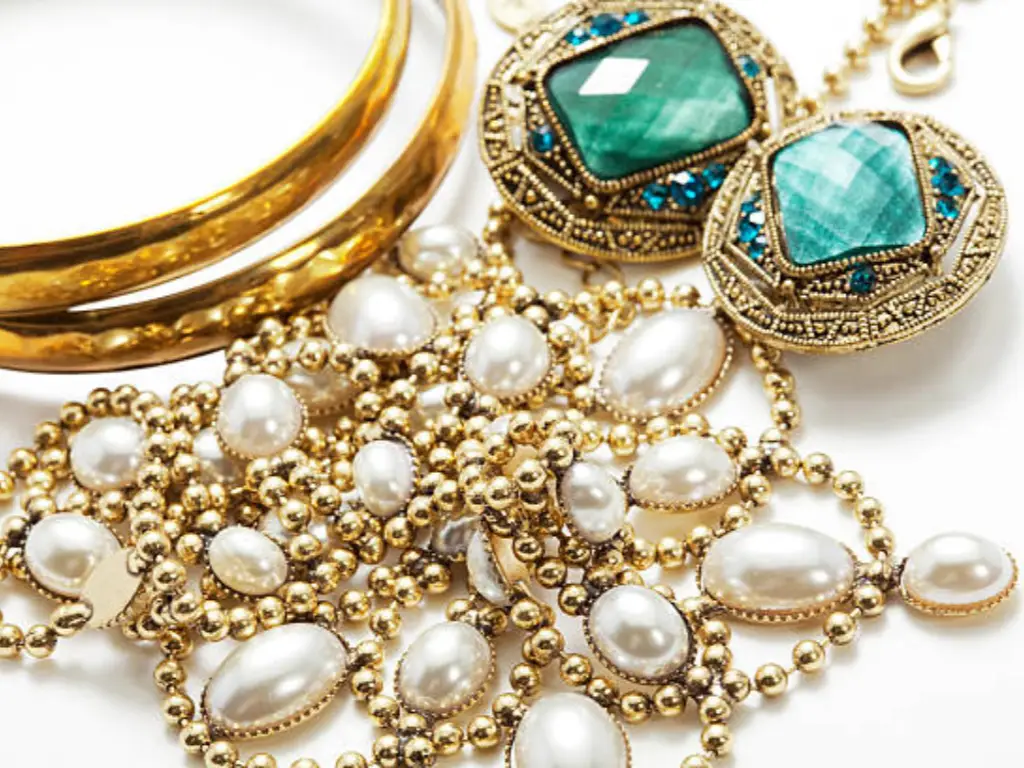
The terminology used in the estate jewelry market is specific and regulated by industry standards. Using these terms incorrectly leads to misrepresentation and financial loss. For both consumers and jewelry brand managers, accurate classification is mandatory.
The following matrix provides a direct, factual comparison of these categories to ensure precise identification and accurate commercial application.
| Classification | Age Definition | Primary Characteristic | Market Application & Production |
| Antique Jewelry | 100 years or older (Currently 1926 or earlier) | Authentic items originating from distant historical periods. | High-value estate items and collector acquisitions; often too fragile for daily use. |
| Vintage Jewelry | 20 to 99 years old | Authentic items reflecting the specific jewelry trends of their exact production decade. | Collectible items purchased for specific aesthetic preferences; requires careful maintenance. |
| Retro Jewelry | Specifically the 1930s to 1950s | Distinctive, bold designs originating from the mid-20th century. (Note: The term is also used generally for modern imitations). | High-visibility statement pieces; represents a shift in historical manufacturing materials. |
| Reproduction / Vintage-Inspired | Newly manufactured (Contemporary) | Replicates a specific historical jewelry era using modern manufacturing capabilities. | High-quality, durable items intended for daily wear; scalable for modern retail collections. |
The 7 Major Vintage Jewelry Styles
To accurately identify or design vintage jewelry pieces, you must know the exact specifications of each historical period.
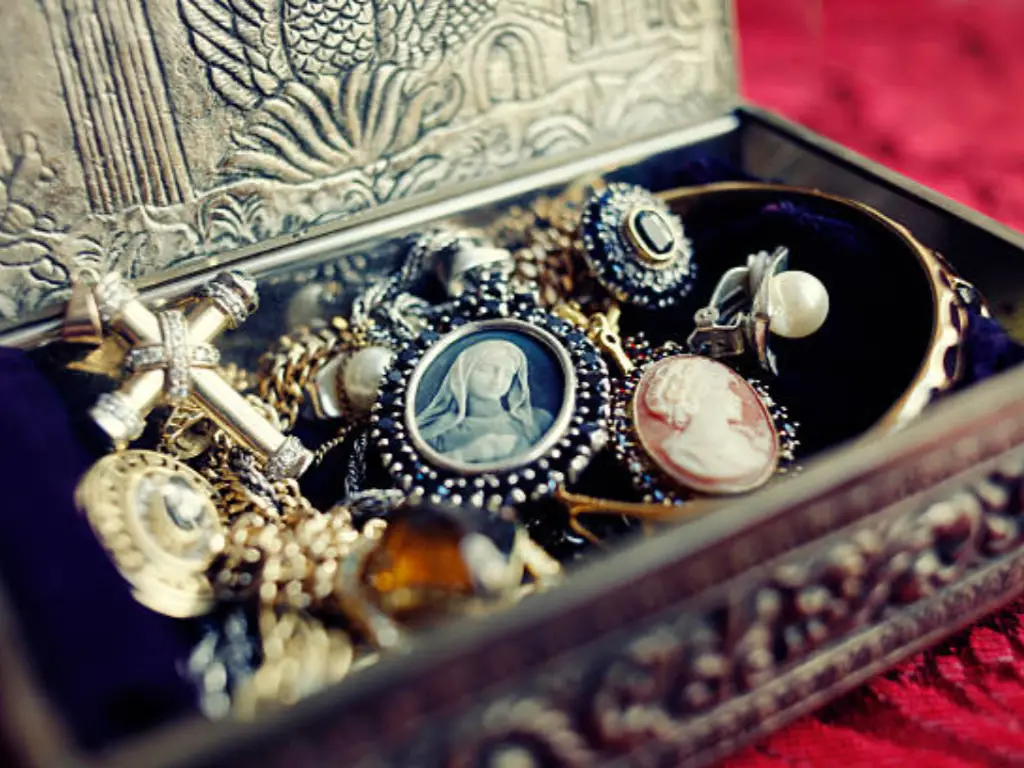
The Georgian Era (1714–1837)
Georgian jewelry is rare. Items from the georgian era were entirely handmade, resulting in intricate designs that are difficult to replicate exactly today.
- Key Features: Jewelers used a technique called repoussé, hammering metal into detailed shapes. They also used closed-back settings lined with metal foil to enhance the reflection of the stones.
- Iconic Materials: Silver and high-karat gold were the primary precious metals.
- Vibe/Personality: The designs feature highly elaborate, regal aesthetics. Note: Never expose original Georgian pieces to water, as moisture ruins the foil backing.
The Victorian Era (1837–1901)
The victorian era aligns exactly with Queen Victoria’s reign. The styles changed based on the stages of the Queen’s life.
- Key Features: The early years focused on romantic, sentimental pieces. Following the death of her husband, the market saw a massive increase in mourning jewelry. This category often incorporated actual locks of hair from the deceased, securely woven into brooches or pendants. Hair jewelry was a standard practice of the time. Other items included slide chains and decorative stick pins.
- Iconic Materials: Black onyx, jet, and seed pearls were common. Gold plating became more accessible during this period due to the invention of electroplating.
- Vibe/Personality: Victorian jewelry is highly symbolic and often heavy in appearance.
The Edwardian Era (1901–1915)
The edwardian era, coinciding with the reign of King Edward VII, is also known in Europe as the Belle Epoque. King Edward influenced a shift toward lightness and precision in decorative arts.
- Key Features: Edwardian jewelry is defined by the introduction of the oxyacetylene torch, which allowed jewelers to work with platinum. This resulted in extensive filigree work and milgrain edges—tiny metal beads bordering the designs.
- Iconic Materials: Platinum, natural pearls, and small diamonds were the standard.
- Vibe/Personality: The edwardian styles are highly delicate, resembling fine lace.
The Art Nouveau Era (1890–1910)
Running concurrently with the Edwardian period, the art nouveau movement rejected industrial mass production. Art nouveau jewelry prioritized artistic design over the intrinsic value of the stones.
- Key Features: Art nouveau styles are characterized by asymmetrical lines and enameling techniques like plique-à-jour, which creates a stained-glass effect. Common motifs included insects, the female form, and elaborate floral motifs.
- Iconic Materials: Jewelers favored colorful gemstones, opal, moonstone, and horn.
- Vibe/Personality: The designs are organic, flowing, and highly artistic.
The Art Deco Era (1920–1930s)
The art deco era followed World War I and introduced a radical shift in design. Art deco jewelry remains the most sought-after category in the modern market.
- Key Features: The deco period rejected the flowing lines of the previous era. Art deco pieces feature strict geometric patterns, symmetry, and calibrated gemstone cuts such as baguettes and emerald cuts.
- Iconic Materials: White gold and platinum provided a bright background for high-contrast designs. Jewelers paired diamonds with bold, dark stones like onyx or bright sapphires.
- Vibe/Personality: The art deco period represents sharp, architectural precision. An art deco engagement ring remains a high-demand item today.
The Retro Era (1930s–1950s)
The retro era was shaped by the economic realities of the Great Depression and World War II. Platinum was restricted for military use, forcing jewelers to change their materials.
- Key Features: Retro jewelry styles feature large, three-dimensional designs. Items like oversized cocktail rings, wide tank-track bracelets, and heavy charm bracelets became standard.
- Iconic Materials: Jewelers relied heavily on yellow gold and rose gold. To compensate for the lack of large precious stones, they used large synthetic stones or semi-precious gems like citrine and aquamarine.
- Vibe/Personality: Retro designs are bold, heavy, and highly visible.
Mid-Century Modern (1950s–1970s)
Post-war mid-century jewelry reflected new manufacturing capabilities and a relaxed social atmosphere. The mid 20th century saw the expansion of global trade and popular culture.
- Key Features: Century jewelry from this time often features highly textured gold surfaces, such as brushed, wire-twisted, or bark-like finishes. Designers like Georg Jensen influenced the market with clean, modernist silver designs.
- Iconic Materials: Textured gold, turquoise, and coral.
- Vibe/Personality: The designs are playful, unconventional, and practical for daily use.
Spot the Era: A 30-Second Vintage Authentication Checklist
When evaluating jewelry pieces, you need objective criteria to determine their age. Use this checklist to examine popular motifs and construction details.
- The Clasp Test: Look at the mechanics. A simple “C-catch” without a locking mechanism indicates a piece likely made before 1900. A trombone clasp was common in European jewelry from the 1890s to the 1940s. A modern lobster clasp indicates the item was manufactured recently.
- The Stone Cut: Examine the diamonds under magnification. An Old Mine Cut or Old European Cut has a smaller table, a higher crown, and a visible culet (the flat facet at the bottom) compared to a modern round brilliant cut.
- Sellos: Check the metal for stamped marks. These stamps verify the metal content and often identify the manufacturer or the year of assay.
How to Wear Vintage Jewelry in 2026
The styles of vintage jewelry should be actively combined with the modern clothes to be relevant commercially. Consumers buy them to wear them on a daily basis and not to keep them in safes. In the case of retail brands, showing how to wear these items directly boosts sales and customer interest. The modern market requires the practical use of historical designs.
- The High-Low Mix: Mix formal vintage with casual modern fabrics. Put on a platinum and diamond art deco brooch on a regular heavy-weight denim jacket or a plain cotton shirt. This styling technique generates instant visual contrast and does not make the jewelry look outdated. It changes the setting of the work to the formal evening dress to the everyday dress.
- The Ring Stack: Put things of various ages on one hand. Wear an extremely elaborate edwardian ring with elaborate filigree work on the same finger as a plain, unadorned modern white gold band. This approach emphasizes the sophisticated artisanship of antique works and balances the general visual image with minimalism of the present day.
- Category Focus: The jewelry market of men shows a quantifiable growth in the daily wear of historical accessories. Vintage stick pins, heavy retro gold chains, and engraved signet rings are being actively bought by consumers. Customers use them with normal business clothes or contemporary street clothes. These are the particular categories that retailers need to stock to capture the expanding male population who are interested in authentic vintage products.
Bringing Vintage Designs to Life: Crafting High-Quality Reproductions
Original antique works are uncommon, delicate and usually have non-compliant alloys. Modern retail brands cannot source consistent amounts of genuine vintage jewelry. The best commercial approach is to produce quality reproductions that are both historical and modern in terms of durability and safety.
Azone Jewelry is a company that was founded in 2003 and offers B2B clients the specific production capabilities needed to introduce vintage-inspired collections. It takes accuracy to reproduce the complex designs of the art nouvelle movement or the geometric designs of the art deco period. Our 3D and CAD software, CNC engraving, and specialized casting have a defect rate of less than 3%.
Quality and compliance are obligatory. Our products are tested to be metal safe by the REACH test and are subjected to intense wear tests. We work with SMETA, BSCI and ROHS. In the case of sustainable brands, we use GRS-certified recycled precious metals. Our minimum order quantity is 50 to 100 pieces with a 7-to-14-day sample turnaround so that designers can experiment with markets without huge inventory risk.
Conclusión
Vintage jewelry styles provide an exact record of historical design and manufacturing techniques. Whether you are authenticating a Georgian brooch, studying an Edwardian necklace, or analyzing the market for retro gold pieces, clear identification is the first step.
Are you a designer or retail brand looking to launch your own vintage-inspired jewelry collection? Azone Jewelry possesses the exact manufacturing technology and specialized craftsmanship required to execute complex historical designs. Provide us with your concepts or sketches, and we will deliver accurate CAD drawings and physical prototypes.
Contact Azone Jewelry today to request a quote and review our custom OEM/ODM manufacturing specifications.


 English
  Spanish
  French
  German