.png.webp)
From Thrift to Profit: How to Sell Costume Jewelry & Scale Your Brand
Staring at a tangled 10-pound mess of vintage pieces? Stop wasting time. Whether researching how to sell estate costume jewelry online or scaling a brand, invisible costs kill margins. This blueprint reveals the “Triage System” to identify 1/20 12K GF gems, maximize Junk Drawer Lot profits, and transition to high-margin manufacturing with Azone Jewelry. Ready to scale?
Scroll to Master the Bling
The Raw Economics: The $10 Rule and Invisible Costs
In the world of learning how to sell old costume jewelry, time is your only non-renewable asset. Most amateurs fall into the trap of “Emotional Listing”—they spend 45 minutes untangling, chemically cleaning, photographing, and writing a poetic description for a single $8 unbranded necklace. This is not a business; this is a poorly paid hobby.
Let’s break down the true anatomy of a low-dollar transaction. If you sell a vintage brooch for $10 on a major marketplace, you immediately lose about 15% to platform fees and payment processing ($1.50). You spend another $4.00 on tracked shipping (if offering free shipping to boost algorithm ranking). Packaging materials like bubble mailers, thermal labels, and custom tissue paper cost roughly $0.50. Your net revenue is now $4.00. If your initial sourcing cost was $1.00, your actual profit is $3.00. If you spent 30 minutes processing that single item, your effective wage is $6.00 an hour.
The Baseline: Items with a projected market value below this figure are never listed individually.
Triage Target: You must aggressively sort 10 lbs of mixed estate jewelry in under 15 minutes.
The Professional’s Hourly Profit Formula
(Gross Sale – Sourcing Cost – Fees – Shipping – Materials) / Total Time Spent = Real Wage
To scale a profitable reselling operation, you must ruthlessly eliminate low-margin individual sales. Focus entirely on high-value “Signed” pieces, strategic bundling, or bulk liquidation.
The Pro-Triage System: Identifying the 10%
When you purchase a massive box from an auction, your goal is to isolate the top 10% of your haul—the high-value pieces that will pay for the entire lot. Professional flippers set up a “4-Box Method”: Box 1 (High-End Individual Listing), Box 2 (Wearable Unbranded Bundles), Box 3 (Crafter/Repair Parts), and Box 4 (Trash). You look for three specific markers: Material, Hallmarks, and Condition.
1. The Magnet & “Maker’s Mark” Loupe Test
Before you even look at the design, run a strong rare-earth neodymium magnet over the entire pile. If a piece leaps aggressively to the magnet, it contains a high amount of iron or steel-core base metal—common in modern, mass-produced fast fashion. These highly magnetic pieces almost always go straight into the bulk “Junk Drawer Lot” box.
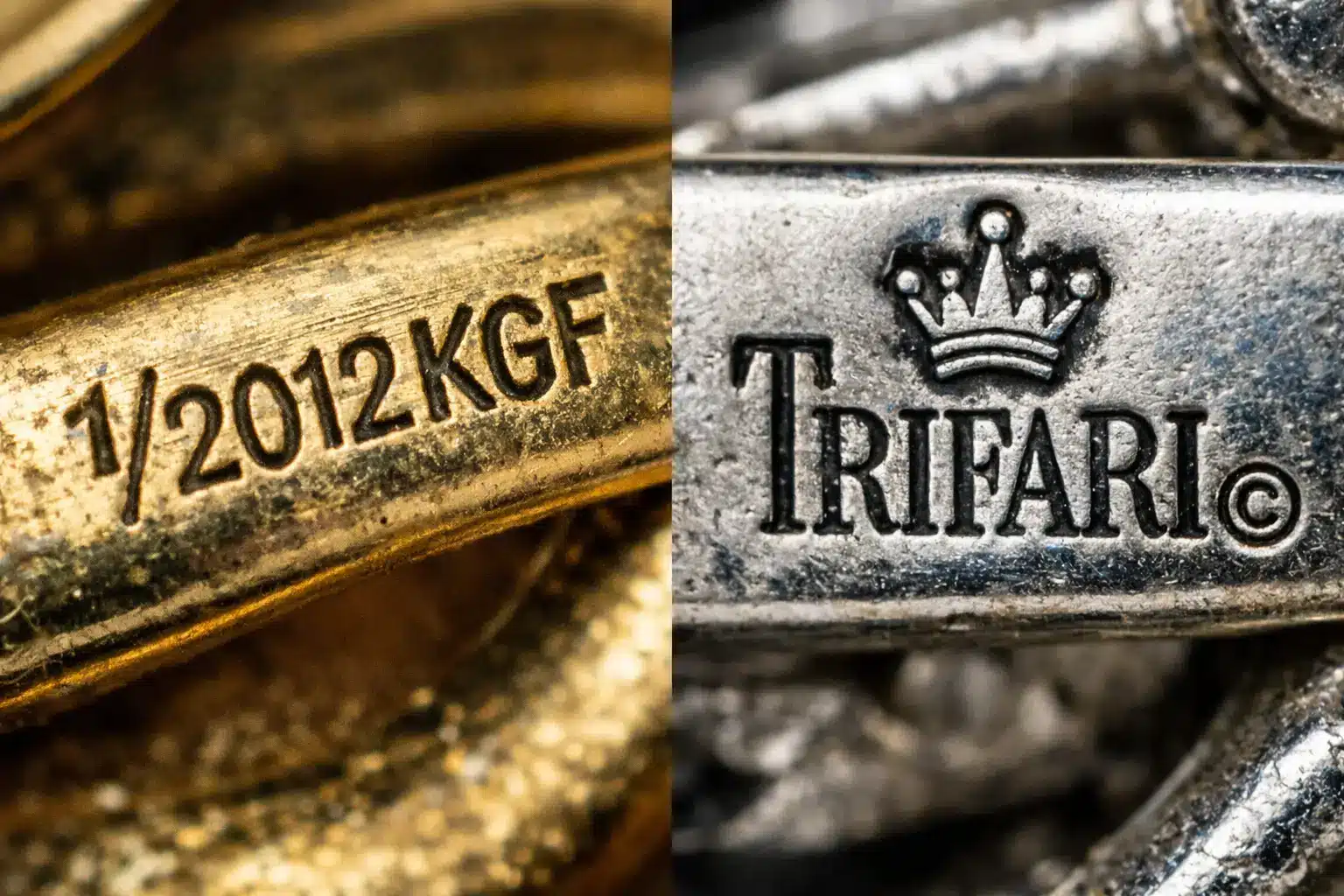
However, if the piece does not stick, grab your 10x jeweler’s loupe. Look closely at the inside bands of rings, the back of brooch settings, and the tiny metal tags attached to clasps. You are hunting for 1/20 12K GF (Gold Filled) or 14K HGE (Heavy Gold Electroplate). Unlike cheap “flash plating,” a 1/20 12K GF mark legally dictates that 5% of the total metal weight is solid 12-karat gold mechanically bonded to a brass or copper base. This is the hallmark of high-end vintage costume jewelry.
2. Signed Vintage vs. Unsigned Beauties
A signature from a legendary mid-century design house can turn a $5 thrift find into a $500 museum-quality piece. When researching how to sell vintage costume jewelry, you must memorize the “Big Six”: Trifari, Coro, Monet, Napier, Miriam Haskell, and Eisenberg.
Dating these pieces adds even more value. For example, a Trifari piece with a crown over the “T” and no copyright symbol indicates it was produced before 1955. Even if a piece is unsigned, if it features heavy rhodium plating, prong-set Austrian crystals (never glued), and intricate riveted construction, it qualifies as an “Unsigned Beauty” and belongs in Box 1 for premium pricing.
3. Condition Triage: Spotting Verdigris and Foil Damage
A famous signature means nothing if the piece is fundamentally destroyed. The number one enemy of vintage costume jewelry is Verdigris. This is a toxic, bright green, crusty oxidation that forms on copper and brass alloys when exposed to acidic skin oils and moisture over decades. Heavy verdigris eats directly into the metal plating, leaving permanent pitting. Pieces with severe verdigris must be quarantined immediately, as the oxidation can physically spread to other clean jewelry.
Additionally, check vintage rhinestones. If the silver foil backing on the glass has degraded from water damage, the stones will look dull, dark gray, or “dead.” Dead stones cannot be cleaned; they must be manually replaced.
Pricing Strategies: Data Over Emotion
How much should you sell costume jewelry for? Amateurs base their prices on emotional attachment or what they hope to make. Professionals let cold, hard data dictate their margins.
The “Sold Comps” Law
Whether selling online or in a physical booth, active listings mean absolutely nothing. Just because someone is currently asking $150 for a Monet hoop earring on eBay does not mean it holds that value. Always filter your search database to “Sold Items” or “Completed Listings.” If ten similar brooches sold in the last 90 days for $24, your true market value is exactly $24. Pricing yours at $150 guarantees your capital remains locked in dead inventory.
For extremely rare pieces where standard marketplaces show zero sold history, elite professional sellers utilize paid subscription tools like WorthPoint, which archives over fifteen years of historical auction data. When dealing with unbranded but exceptionally high-quality pieces, you must price based on material weight and visual impact. A heavy, non-magnetic brass collar necklace with a verified 1/20 12K GF stamp should inherently be priced at a 40% to 50% premium over standard base-metal pieces.
Profit-Maximizing: The “Junk Drawer Lot” Secret
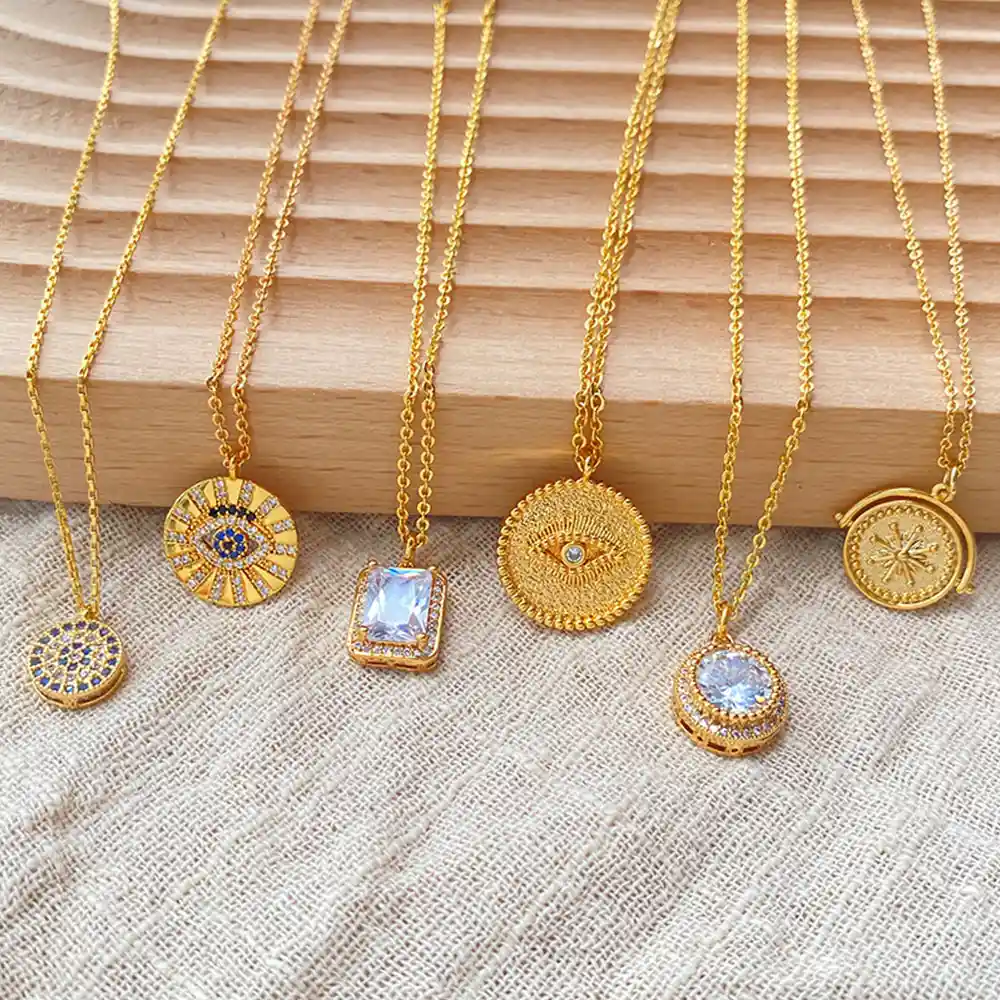
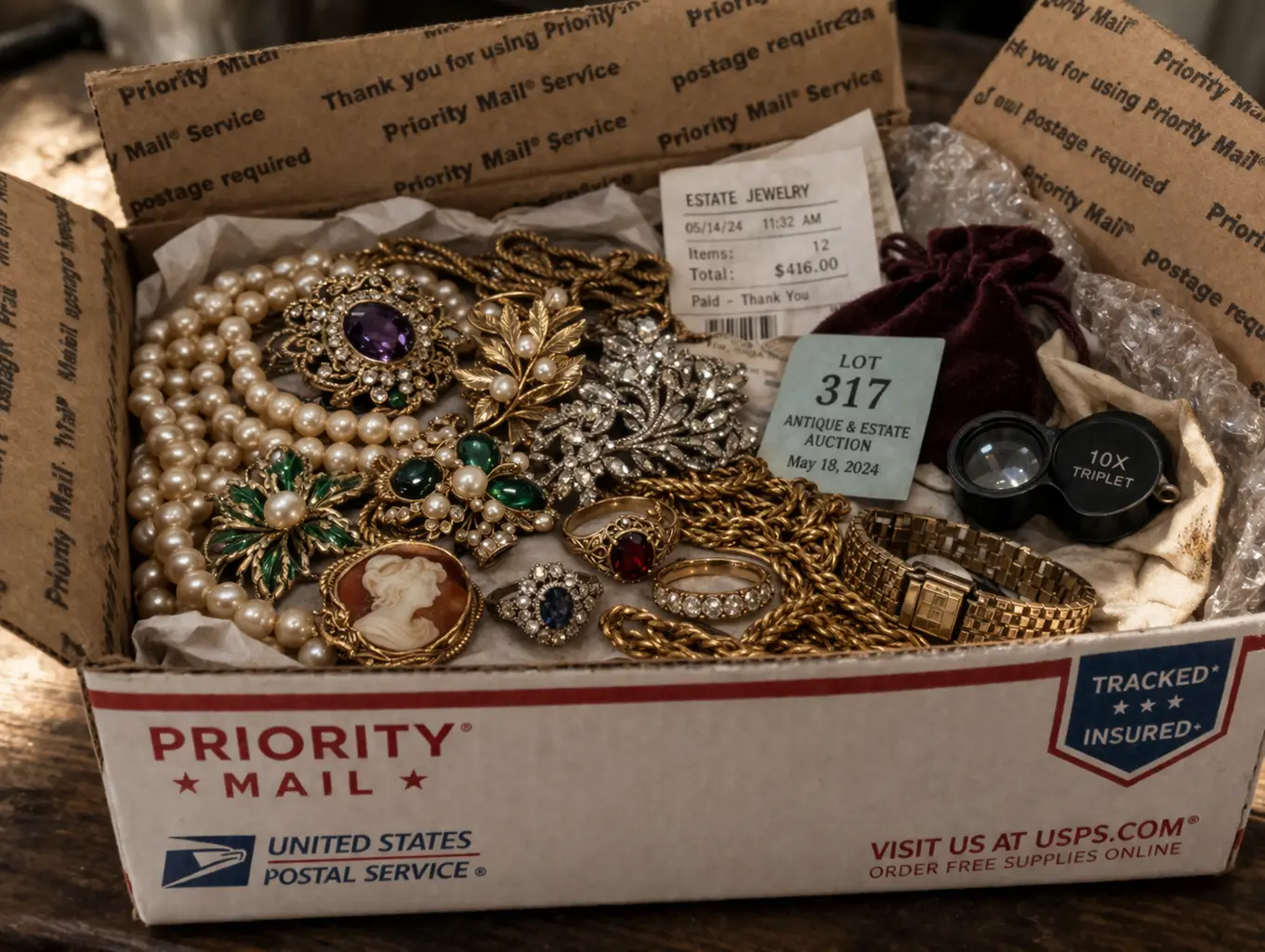
After your rigorous triage, approximately 80% of your haul will be unsigned, mass-produced, or slightly flawed items. Selling these individually is a catastrophic profit killer. The professional, high-volume solution? You must master how to sell costume jewelry on eBay using the highly lucrative “Junk Drawer Lot” or “Lottery Lot” strategy.
These terms are massive, highly competitive search queries used daily by professional buyers, jewelry upcyclers, and dopamine-hunting vintage collectors. Instead of agonizing over listing 40 unbranded chains for $2 each, you sweep them all into a USPS Medium Flat Rate box, weigh it, and list it simply as a “5 lb Vintage Costume Jewelry Junk Drawer Lot – Unsearched & Wearable.”
Crafters and artisans actively seek out these lots specifically to harvest unique clasps, vintage glass beads, and rhinestone chains to upcycle into modern, handmade creations. By selling strictly by the pound, you instantly liquidate dead stock and recover your initial sourcing capital in a single, efficient transaction.
Strategic Bundling to Defeat Shipping Thresholds
If you prefer to sell on modern fashion apps like Poshmark or Mercari, you encounter a different obstacle: flat-rate shipping fees (around $7.97). Consumer psychology strictly dictates that no buyer wants to pay $8 in shipping for a single $5 acrylic beaded necklace. The mathematical solution is Strategic Bundling. Combine five bohemian-style necklaces into a “5-Piece Boho Festival Layering Bundle” and price the entire lot at $25. The buyer perceives immense value by bypassing individual shipping penalties, and you clear five pieces of inventory at once.
The Omnichannel Matrix: Where to Sell Your Finds
Where you sell your inventory is just as critical as what you are selling. You cannot rely on a single marketplace. You must match the specific era, quality, and volume of the jewelry to the exact buyer demographic that frequents that platform.
1. eBay (The Global Standard for Vintage)
Lo mejor para: Highly researched Signed Vintage (Trifari, Monet), High-End 1/20 12K GF pieces, and heavy “Junk Drawer Lots.”
Strategy: Use “Buy It Now” with Best Offer enabled for 90% of your listings to ensure steady, predictable income. Only use 7-day Auctions for incredibly rare, highly sought-after designer pieces (like an authentic 1940s Eisenberg Ice brooch) to trigger emotional bidding wars among hardcore collectors. Expect fee structures around 13-15%.
2. Poshmark & Depop
Lo mejor para: Y2K fashion pieces, chunky 80s acrylics, and curated themed bundles.
Strategy: These platforms thrive on negotiation and trend-chasing. You must price your items at least 20% to 30% higher than your actual target net profit. This padding allows you to aggressively use the “Offer to Likers” feature, triggering notifications on buyers’ phones with a perceived discount, while still hitting your desired profit margin after their flat 20% commission fee.
3. Flea Markets & Antique Malls
Strategy: If you are wondering how to sell costume jewelry at the flea market, understand that physical presentation is everything. Elevate perceived value by using black velvet display busts for your $15-$20 pieces. Always include a $5 “digging bin” at the front of your table to act as a loss-leader; the physical act of digging draws a crowd, and crowds attract higher-paying customers.
4. Garage Sales & Yard Sales
Strategy: How much to sell costume jewelry at garage sale? Keep it brutally simple and emotionally detached: $1 to $3 per piece, or “Fill a ziploc bag for $10.” Your primary goal at a garage sale is absolutely not maximizing profit margins; it is purely about clearing physical volume and generating quick cash flow.
Presentation Hacks That Create Perceived Value
Jewelry is a highly visual, emotionally driven commodity. Terrible lighting will make a $150 vintage crystal necklace look like cheap plastic from a grocery store vending machine. You must strictly adhere to three unbreakable visual rules to command top dollar.
1. Never use direct smartphone flash: Flash photography completely washes out the natural, warm patina of vintage metals and creates harsh, blinding white reflections on glass rhinestones. Always use diffused natural window light, or invest $40 in a cheap LED softbox equipped with a daylight-balanced bulb (5500K) to capture true colors.
2. Always provide human scale: A 30-inch opera-length pearl necklace looks exactly like a 14-inch choker when laid flat and coiled on a white table. Use a standard velvet neck bust display, or photograph the item next to a recognizable common object (like a US quarter) to establish scale and drape.
3. The Macro “Money Shot”: Your listing must always include a sharply focused, extreme close-up photo of the clasp, the back of the setting, and any maker’s marks. Professional buyers will rarely purchase a high-priced item without seeing the physical hardware construction.
The Scalability Wall: From Flipper to Brand Founder
If you have successfully mastered the art of triaging, bundling, and selling vintage jewelry online, you will inevitably hit the ceiling of the reselling business model: The “Scalability Wall.” Sourcing thrifted items and driving to weekend estate sales takes an enormous amount of physical time. The quality is completely out of your control, inventory is frustratingly unpredictable, and you can never restock a “bestseller” once it sells out.
The smartest, most profitable flippers eventually evolve. They transition from hunting for other people’s discarded items to building a high-margin, predictable e-commerce brand. This requires pivoting away from unpredictable thrift stores and partnering with a world-class manufacturing partner.
Zero “Green Finger” Returns (Stainless Steel + PVD)
Stop dealing with oxidized vintage brass, toxic verdigris, and furious customers complaining about allergic reactions. By upgrading your product line to Acero inoxidable 316L base materials combined with advanced PVD Vacuum Plating, your jewelry becomes highly resistant to water, sweat, and tarnishing. This hardwearing combination ensures 1-2 years of brilliant color retention and virtually eliminates quality-related returns.
Reverse Engineering Your Best Vintage Finds
Not a 3D designer? That is not a problem. Did you sell a gorgeous 1980s vintage collar necklace that 50 people fought over in a bidding war? Send us detailed photos or mail us the physical piece. Our engineering team provides 1:1 Reverse Engineering and CAD sampling in just 7 to 14 days. You can legally recreate your best-selling vintage silhouettes with modern, durable, and skin-safe materials.
Tested for European & US Markets
Modern consumers demand eco-friendly transparency and stringent safety standards. Partnering with a manufacturer that holds strict SGS, REACH, and GRS (Global Recycled Standard) certifications ensures your pieces are lead-free, nickel-free, hypoallergenic, and ethically produced. These certifications are non-negotiable if you plan to scale your brand internationally.


 English
  Spanish
  French
  German